coffee · bogotá · travel
The absent-minded cousin
My mother's neighbour's cousin landed in Paris with two kilos of coffee for me. He couldn't come to Lyon, so I took the train to meet him at the Gare de Lyon.

On Tuesday night, while Inés was showing me the gap from her tooth for the fifth time, a message came in from a number starting with +57. It was a blurry photo of the Eiffel Tower, taken from a bus, and underneath it: "Good evening don Julián so sorry to bother you, this is Edwin, doña Gladys's cousin, your mother's neighbour, I'm in Paris with the package". Then another one: "Sorry, is Lyon very far?".
It was the absent-minded cousin. The coffee one. The one my mother announced two weeks ago in a voice message with a pressure cooker whistling in the background, and who, she said, so as not to promise anything, might be bringing two kilos. He was bringing them. What he wasn't bringing was time: he was in Paris for a packaging trade fair, with his boss, until Friday, and the boss wouldn't even let him go to the toilet alone.
I told him not to worry, that Lyon was two hours away, that I'd come to him.
The seven o'clock train
Claire gave me the look you give someone who is about to cross a country for a bag of coffee. I told her it wasn't just the coffee, I was also sending the book to my mother. She said of course, the book. She offered to pick the kids up from school and asked me to bring her something from a Paris bakery, anything, so she could say it was from Paris.
This morning I caught the 7:04 TGV from Part-Dieu, with a copy of Las cuatro y media in my backpack, wrapped in a sweater. It was full of men in suits who opened their laptops before the train had even moved. I didn't open anything. I watched the fog over the Burgundy fields, the white cows standing so still they looked glued on, and thought that I hadn't been to Paris in over a year, and that in twelve years I had never gone to Paris for anything this important.
Edwin and I had agreed to meet in the main hall of the Gare de Lyon, under the departures board, at half past nine. At nine forty he wrote that he was at the Gare du Nord. So sorry. Was that a different station? It was a different station.
Qué pena con usted
He turned up at a quarter past ten, running, in a puffer jacket of the kind you buy at Unicentro, with a cloth bag from Éxito over his shoulder. I recognised him before he recognised me, from the way he walked, looking up, the way all of us from Bogotá walk the first time we leave and discover that buildings can be old on purpose. He must be about thirty-five. He shook my hand, then hugged me, then said "qué pena con usted" three times in a row: for the station, for the time, for the boss.
It had been years since a stranger said "qué pena" to my face. It gave me a silly kind of happiness, the kind you try to hide.
We had a coffee standing at the station counter, which he tasted and politely left half-finished. He told me he hadn't known my mother long, just from the Christmas novenas at doña Gladys's building, and that she had made him climb the three flights of stairs to the apartment in Chapinero with his suitcase so she could pack the parcel herself, because she didn't trust the way he packed. He said my mother was doing very well. That she'd told him off for not wearing a scarf. That she had a photo of my first communion on the shelf.
Then he opened the Éxito bag on the counter.
The package
There were four half-kilo bags of coffee from a shop on 60th Street that I've known since I was a boy, each one wrapped in pages of El Tiempo. There was a block of panela. And there was something round wrapped in a tea towel that I wasn't expecting: the enamel mug. The white one, with the blue rim and the chip on the side by the handle, the one my mother used to pour me a weak tinto with milk in at eleven o'clock, so I'd feel grown up. Edwin handed it to me carefully, as if it were an egg. "Your mother said you'd know what it was for".
I didn't say anything for a while. Edwin, who is absent-minded but not stupid, became very interested in the departures board.
I gave him the book for her. I asked him not to get it wet, not to bend it, not to leave it in a taxi. He swore on his mother. He put it in the Éxito bag the coffee had come in, and the bag was full again, but of something else. We said goodbye under the clock tower, which you can actually see from the hall, and he ran off to find the metro in the wrong direction. I called after him. He came back. Qué pena.
In a bakery on the rue de Lyon, which isn't in Lyon either, I bought a paris-brest for Claire. I came home on the one o'clock train with my backpack on my knees and the smell of coffee seeping through the newspaper, so strong that the woman next to me asked if I had something to eat in there. I told her no. Something to drink.
It's nine at night now and the flat smells like the shop on 60th Street. Claire ate half the paris-brest and said they make them better in Lyon, which is what she says about everything from Paris. The kids are asleep. The mug is washed and drying upside down next to the nine-euro moka pot, and a little while ago I took the leftover Carrefour coffee up to the top floor and left it on Monsieur Delorme's doormat, with a note. Tomorrow at eleven I'll take him up a cup of the real thing.
Keep reading

Two mice
Inés lost her first tooth at dinner and wanted to know who would come for it: the petite souris from Lyon or Ratón Pérez from Bogotá. They both came.
A number two
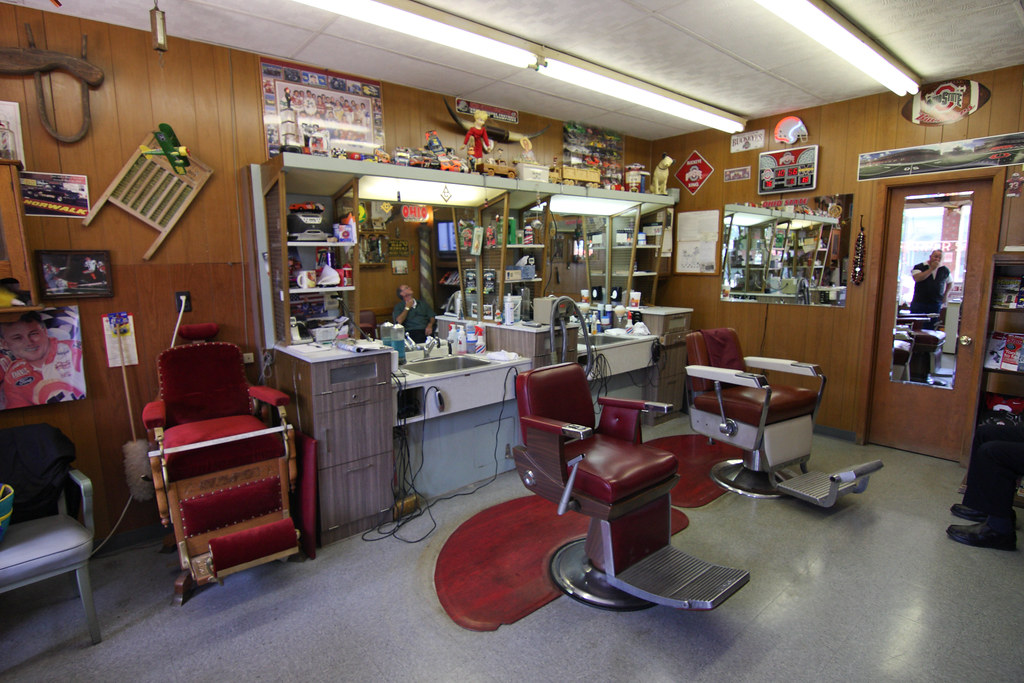
Twelve years of saying "comme d'habitude" at the barber's on the Grande Rue. This time Samir wasn't there, and I had to explain my haircut in French. I couldn't.
The sixth door
On Halloween, the man on the top floor wouldn't open up for Inés. The next day he came down to return her witch drawing and told me he's been hearing me talk to myself for years.