laundry · home · rain
The drying rack
In November nothing ever dries in Lyon. A folding rack in the living room, one of Inés's socks gone missing, and my mother's sheets in the sun on a Bogotá rooftop.
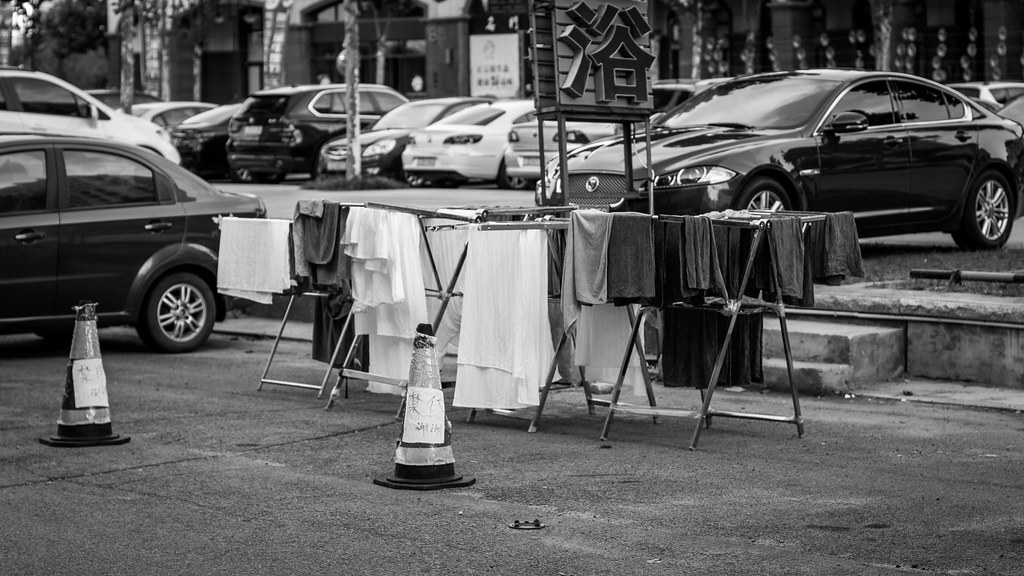
Since Thursday there has been a folding drying rack standing open in the middle of the living room, and the house has rearranged itself around it with the meekness of a family rearranging itself around a sick relative. You have to walk around it to reach the sofa. You have to duck so a shirt doesn't get you in the face. Tomás calls it "the skeleton", because with the lamp behind it and trousers hanging off it, it looks like a big, patient animal that fell asleep on its feet.
It has been raining for nine days. It's not Bogotá rain, which comes down in a rage for an hour and leaves; it's a grey, sideways drizzle that doesn't quite wet you and doesn't quite stop, and that makes anything you hang outside damper when you bring it in than when you put it out. In France almost nobody has a tumble dryer, or they have one and use it with the guilt of someone eating the last slice of cake. Claire is one of those who don't. She says it costs money, it shrinks things, it turns the towels to cardboard. I said yes twelve years ago, and every November since I've paid for that decision in square metres of living room.
The sock
On Saturday Inés stood in front of the rack with her hands on her hips and announced that she was missing a sock. Not just any sock: the purple-striped one, from last Christmas, the one that, according to her, has "the good partner". We went through the rack piece by piece, the basket, the bottom of the washing machine, the pocket of my jacket, the hallway. Tomás, from the sofa, without looking up from his book, said that socks aren't lost, they go to live in another dimension, and that a YouTuber had explained it very well. Inés gave him a look of a dignity that doesn't belong to a seven-year-old.
We ended up with one purple-striped sock hanging alone from a peg in the window. Claire says that this way the other one is more likely to come back. I didn't ask which statistic she was thinking of.
Rooftop sun
What I really miss, and I didn't know it until this week, is the rooftop in Chapinero. It was a square of concrete painted red, with a low wall and a stone washbasin in one corner, and on Saturdays my mother would climb up with the bucket and hang the sheets on three lines running from one pole to another. I helped, or thought I did, by holding the wooden pegs in my mouth like a sailor. By two in the afternoon the sheets were stiff, white and warm, and they smelled of something I can't name: sun, bar soap, a little brick dust. Sometimes that smell drifts past me in a clothes shop full of new things, or at a laundrette, and the nostalgia is so exact that I have to step outside for a minute.
I sent my mother a photo of the skeleton with the socks hanging off it. She answered with an eighteen-second voice note: that it had been sunny all week in Bogotá, that she had washed even the blankets, and that she'd had to ask the doorman to help her carry them up because they were so heavy. "And don't tell me I didn't warn you", she finished. "Son, why don't you just buy a dryer?"
Tonight, after the kids went to sleep, I turned off every light but the lamp and sat for a while in the living room. The rack was there, with Tomás's school shirt, my trousers, Claire's blue blouse, and in the window, alone, the purple sock. Outside it was still raining. I ran my hand over a sheet that was still warm from the radiator and, for once, it smelled a little of sun.
Keep reading
Lumignons
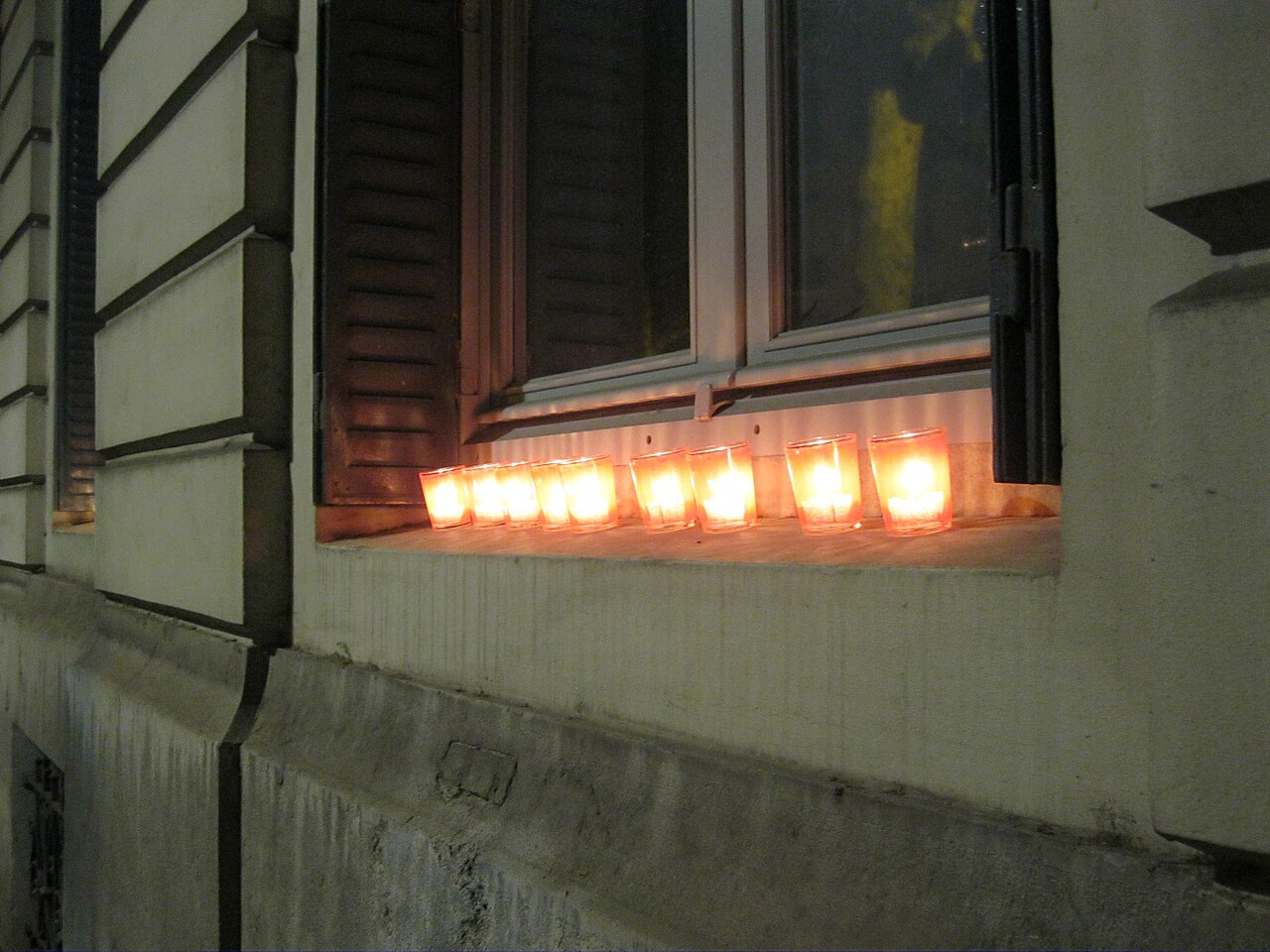
In Lyon, on 8 December, people put candles in their windows. This year Inés brought home a little glass jar to paint, and I thought of the velitas back in Bogotá.

The Latin American shelf
I went to the local library for a book for Inés and came out with The Armies in French, my old favourite novel, translated by someone else. I read it with a pencil.

The Beaujolais has arrived
On the third Thursday of November, Gérard comes down from Oingt with six bottles of new wine he claims not to take seriously. This year I finally tasted it.