home · autumn · bogotá
The boiler man
Our boiler died on the first Sunday of the Toussaint holidays. Three cold days in the Croix-Rousse, a ruana from Bogotá and a repairman who took ten minutes.
Nobody in Bogotá has central heating. I say it with a mix of pride and reproach, which is how we say almost everything about Bogotá. You grow up in flats where it's eleven degrees indoors at six in the morning, you shower in water the gas heater has only half warmed, you put one jumper on top of another, and none of that is called cold: it's called morning. In my mother's flat in Chapinero the only source of heat was the kitchen, so everything happened in the kitchen.
For twelve years I've been telling Claire that indoor cold doesn't bother me. That she grew up with radiators and I grew up with a ruana. On Sunday I got the chance to prove it.
F28
The boiler lives in a cupboard in the hallway, next to the broom and the wellies, and it's older than Inés. It has worked without complaint since we moved in, which is why I've never paid it any attention. On the to-do list on the fridge there's a line that says "call the boiler guy", because the annual service ran out in March. That line was there before I wrote about the ajiaco.
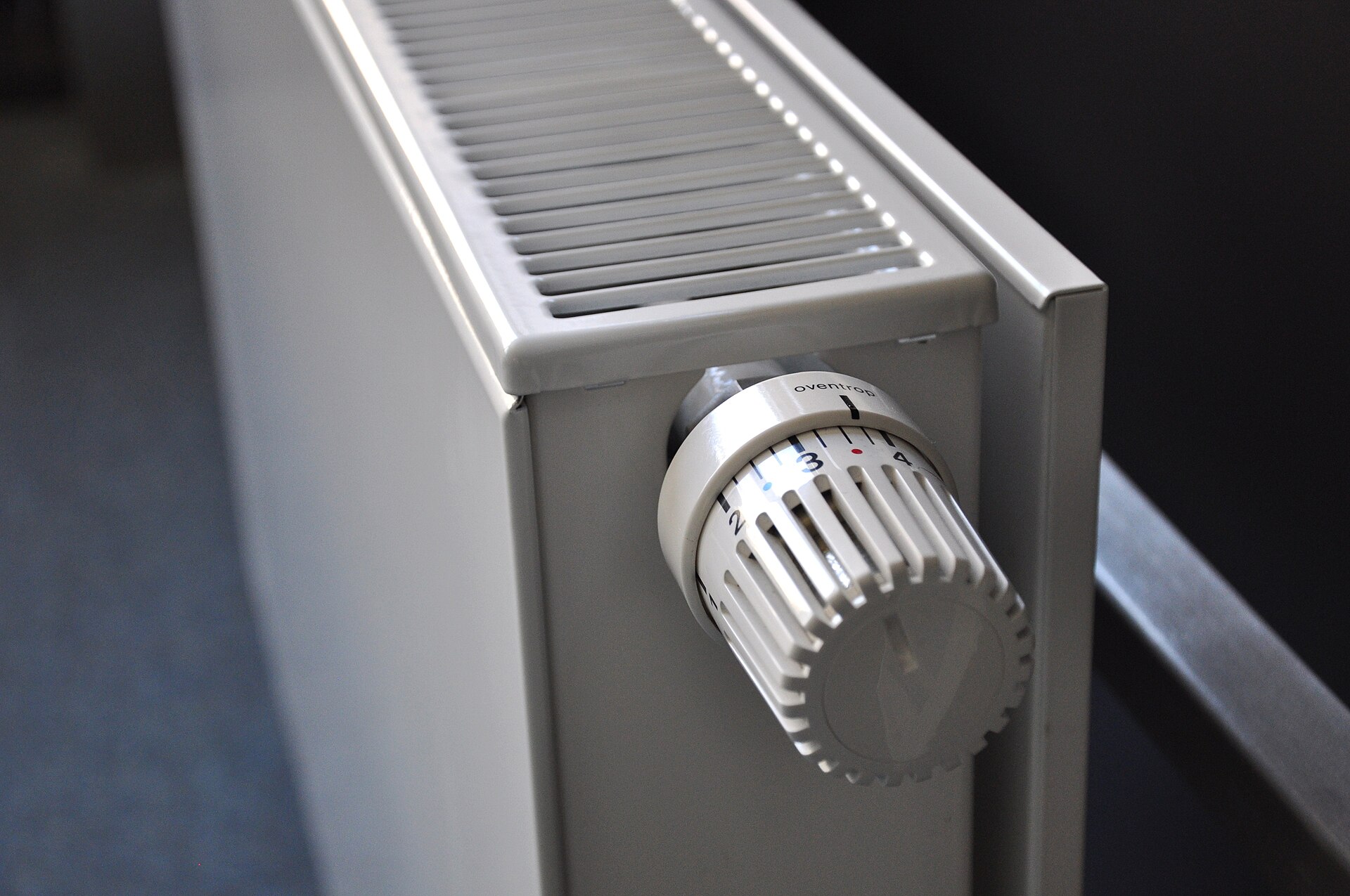
On Sunday, the first day of the Toussaint holidays, I woke up at half six with a cold nose. The radiator in the bedroom was lukewarm, then lukewarm verging on nothing, then dead. In the cupboard, the boiler's little screen was blinking red: F28. No sound at all. The particular silence machines have when they've given up.
The absurd part is that about four years ago I translated a boiler manual. Not this brand, but close: eighty pages of expansion vessels, three-way valves, bleed screws and pressure switches. I remember spending a whole afternoon deciding how to render "mise en sécurité". I was well paid. It was no use whatsoever. I stood in front of the cupboard in my pyjamas with my phone torch, reading a half-peeled sticker the way you read a language you studied at school.
What a rolo can take
I rang the repairman's number, which Claire had on her phone. A recording answered: because of the holidays, emergencies would be dealt with "dans les meilleurs délais", which in French officialese means whenever we get round to it. I left a message in my most reasonable-customer voice. They gave us an appointment for Tuesday.
On Sunday I held up well. I made tinto, put on two jumpers and the grey ruana my mother gave me in August, the one that still smells a little of her wardrobe, and sat down to work at the table by the window as if nothing had happened. Claire watched me from the kitchen, wrapped in the duvet like a burrito, with a face that said I was putting on a brave show. She was right. The kids treated it as an adventure. Tomás worked out, with the bathroom thermometer, that the flat was losing a degree every three hours, and wrote it down on a sheet of paper with a graph. Inés decided we would all sleep in the living room on the sofa bed, "comme des explorateurs".
On Monday I didn't hold up so well. It was fourteen degrees in the living room. My hands shook a little over the keyboard and I translated more slowly, as if the words were cold too. Mid-afternoon I caught myself holding an empty mug in both hands, just for the warmth left in it. I thought of my mother at six in the morning in the kitchen in Chapinero, with the oven door open and her apron over her cardigan, and it occurred to me that I hadn't put up with that cold for thirty-four years because I was brave, but because there was nothing else. Claire turned the oven to two hundred degrees and left the door open. I didn't say a word. I sat down next to it.
That night the four of us slept on the sofa bed, which is meant for two. Inés in the middle, her icy feet against my ribs. Tomás with his graph under his pillow. Claire, on the other side, said to me in the dark, in Spanish, very softly: "Bienvenido a Bogotá." Welcome to Bogotá. I laughed so hard Inés woke up and asked what was going on, and nobody could explain it to her.
Ten minutes
The repairman arrived this morning at quarter past nine. His name is Monsieur Roux; he's about sixty, with a moustache and hands stained with something black that won't wash off, and he speaks with that Lyon accent that stretches out the vowels at the end of a sentence as if hanging them out to dry. He looked at the screen, said "ah, la F28" in exactly the tone Madame Berthier used to tell me I had presbyopia, and crouched down in front of the boiler.
It needed water. That was all. The pressure had dropped below one bar, on a little dial I had never once looked at, and the boiler had gone into safety mode, just like my manual says. Monsieur Roux turned a small blue tap underneath it, no bigger than a coin, waited for the needle to rise, pressed a button, and the boiler coughed, cleared its throat and came on. It took ten minutes, including the time he spent taking his shoes off at the door because Claire had just mopped.
He showed me where the tap was and how to do it, for next time. I told him I knew. He looked at me blankly. I didn't explain about the manual. I paid for the call-out, which I won't repeat here, and signed up for the year's service while I was at it.
It's eleven o'clock now and the radiators are coming back to life one by one, with little metallic knocks in the pipes, like someone coming home late and trying not to wake anyone. Inés has both hands pressed to the one in the living room, waiting for it. The sofa bed is still open. My mother's ruana is folded on top of it, and I haven't put it away.
Keep reading
Varifocals
At forty-six, the optician on the Grande Rue said the word presbyopia. A week of learning to look in layers, with my glasses pushed up on my forehead like my father's.
Ten kilometres, almost
I ran my first ten-kilometre race along the riverbanks of Lyon. I stopped only once, at kilometre seven, right where Fernando's stall used to be.

My mother doesn't do measurements
One Sunday in October I finally opened the jar of guascas and asked my mother, over a video call, to dictate her ajiaco. I couldn't get a single gram out of her.