glasses · work · my father
Varifocals
At forty-six, the optician on the Grande Rue said the word presbyopia. A week of learning to look in layers, with my glasses pushed up on my forehead like my father's.
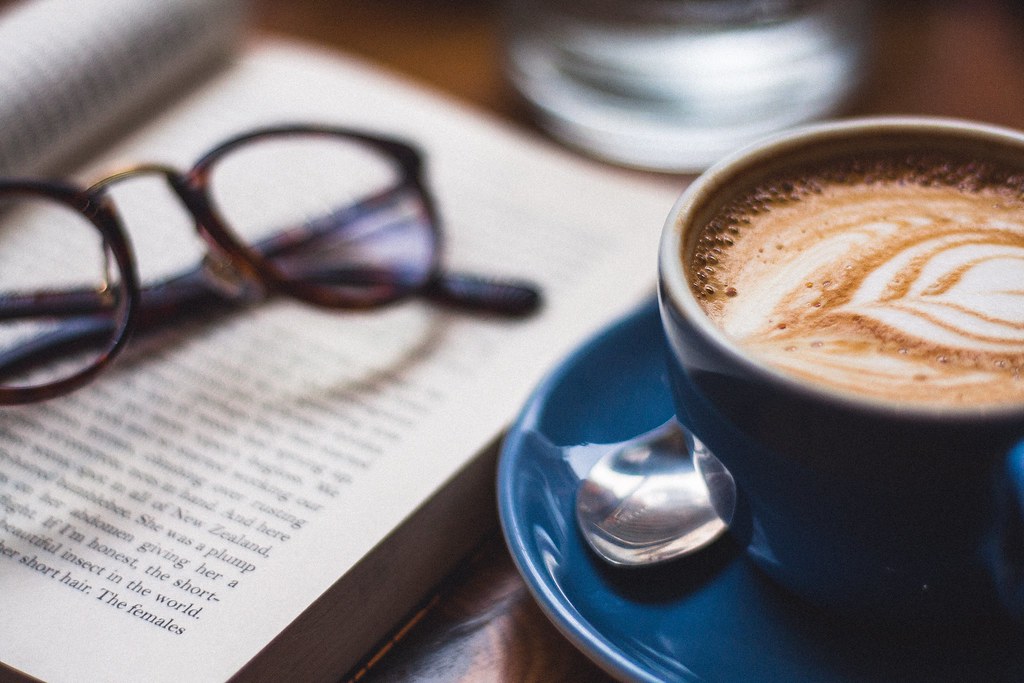
I've worn glasses since I was nine, since my fourth-grade teacher at school in Chapinero noticed I was copying the blackboard by asking the boy next to me what it said. Short-sighted, said the eye doctor on 45th Street, a man with a moustache who smelled of aftershave. Since then I've had glasses in every shape each decade allowed: square tortoiseshell ones that had belonged to my cousin, round ones at university to look more serious, these grey frames Claire picked for me five years ago. With my glasses on, I see the world. Without them, I see a watercolour.
What I didn't know was that at forty-six my glasses would start getting in the way of reading.
The small print
It started at work, which is where everything in my life starts. The contracts I translate have appendices, and the appendices have footnotes, and the footnotes are written by someone who hates humanity, in seven-point type, in a PDF that was scanned crooked. A few months ago I caught myself taking my glasses off to read them. I'd push them up onto my forehead, bring the page up to my nose, and there, without glasses, the letters would come clear as if by miracle. I did it without thinking, twenty times a day.
Claire was the one who said it, one evening, while I was reading the label on a bottle of Inés's cough syrup: "Tu fais exactement comme ton père sur les photos." You're doing exactly what your father does in the photos. I stood there holding the bottle. She was right. My father read El Tiempo like that on Sundays, glasses up on his forehead and the paper a hand's width from his face, and my mother would tell him he was going to go blind and he'd answer that he was already blind, that was why he read like that. He died fourteen years ago, two years before we moved to Lyon. I never asked him why he took his glasses off to read. As a boy, I assumed it was one of those things fathers just do.
The optician
The optician's is on the Grande Rue de la Croix-Rousse, between a bakery and a bike shop, and it's run by a woman with very short white hair called Madame Berthier, who speaks with the precision of a notary. She sat me in front of a machine, had me read smaller and smaller letters, and then handed me a card with a paragraph to read up close. It was about the chestnut harvest in the Ardèche. I read it fine with my glasses on my forehead and badly with them on my nose. She wrote something down and told me, without a shred of pity: "Presbytie, monsieur. C'est l'âge." And then, as if it were a consolation: "You're lucky, it's come late for you."
She suggested varifocals. She explained that they have floors: at the top you see far, in the middle you see the screen, at the bottom you read. That I'd have to learn to move my head instead of my eyes. That for the first week I'd feel "un peu marin", a bit of a sailor. I signed the quote, which I won't repeat here, and walked home feeling I'd crossed a border without a passport.
Sailor's week
I picked them up on Monday. Madame Berthier put them on me herself, settled them behind my ears with cold fingers and had me look at the street, at her computer screen, at a leaflet. Everything was where it should be. Then I stepped out onto the Grande Rue and the pavement tilted. Not much, just a little, like when you climb off a boat in Cartagena and the jetty keeps moving. I went down the Montée de la Grande Côte holding the handrail, looking at the steps through the top of the lens like she'd told me, and even so every step arrived a centimetre before I expected it.
At home the kids greeted me like an experiment. Inés asked me to take them off and put them on herself. She staggered around the living room with her arms out, saying the floor was moving, she was falling, it was like being on a ship, and then she handed them back very seriously and told me not to wear them for running. Tomás wanted to know how much they'd cost. I didn't tell him. He said they must have cost more than his trainers. I said a lot more. He seemed to respect me a little, for the first time since the race.
It's been four days. The pavement doesn't tilt any more. I can read the footnotes in a contract for a haulage company in Villeurbanne without pushing my glasses up, lifting my chin like a hen drinking water, which is what Madame Berthier calls "trouver la zone", finding the zone. And yet something keeps happening: when I'm tired, at seven in the evening, in front of the screen, my hands rise on their own and push my glasses up onto my forehead. I don't need them there. Not any more. But my hands do it anyway, as if they remember something I don't.
Last night, on our Thursday video call, my mother saw me in the new glasses and said nothing about the glasses. She asked whether I was eating properly, whether Inés still had that cough, whether I'd made the ajiaco again. At the very end, as she was saying goodbye, I pushed my glasses up to read a message that had just come in. She went quiet on the screen, the camera pointed at her forehead, and said: "Ay, mijo." That was all. Then she hung up.
The old glasses are in the drawer of my work table, folded, on top of the black notebook. This morning, out of habit, I took them out and put them on to look at the chestnut tree in the courtyard. It was sharp, perfect, every leaf. Same as always. I put them away again.
Keep reading
Ten kilometres, almost
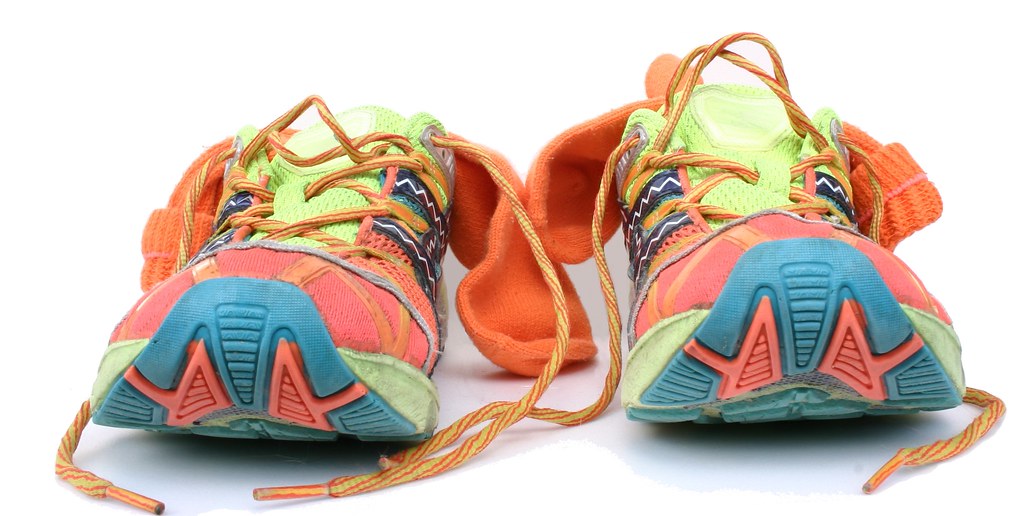
I ran my first ten-kilometre race along the riverbanks of Lyon. I stopped only once, at kilometre seven, right where Fernando's stall used to be.

My mother doesn't do measurements
One Sunday in October I finally opened the jar of guascas and asked my mother, over a video call, to dictate her ajiaco. I couldn't get a single gram out of her.
Bogotá again, in August
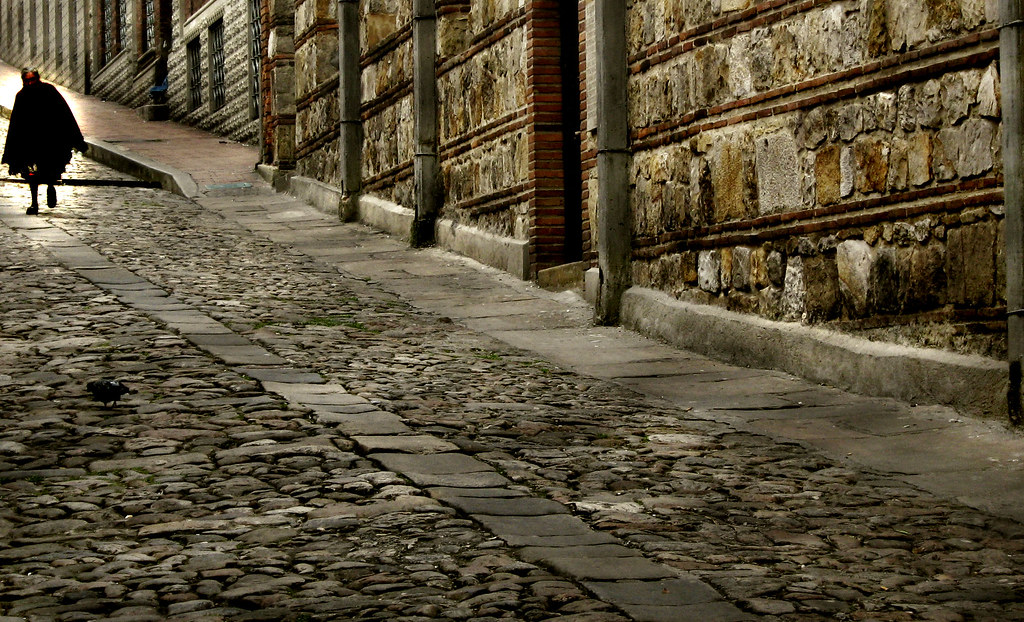
Three weeks in Bogotá with Claire and the kids: the cold of the high plain, my mother a little smaller, an ajiaco, and a question she had never asked me quite like that.