neighbourhood · language · dad
A number two
Twelve years of saying "comme d'habitude" at the barber's on the Grande Rue. This time Samir wasn't there, and I had to explain my haircut in French. I couldn't.
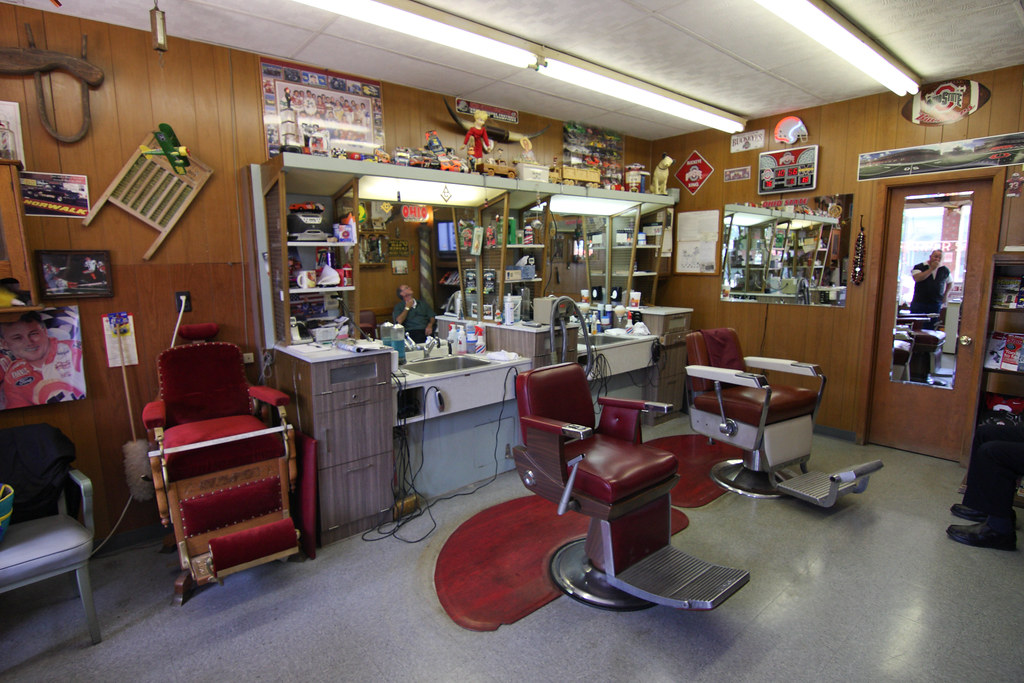
The kids went back to school yesterday after two weeks of holidays, and the flat got its Monday noise back: breakfast standing up, a sock that won't turn up, Inés asking at the door whether it was a swimming day. It wasn't. This morning, after dropping them at the gate, I caught myself in the bakery window and finally understood what Claire had been telling me, very diplomatically, for a month: that I had the hair of a nineteenth-century poet, the kind who dies young. The curls were down over my ears. My new glasses kept getting tangled in them.
So I walked up the Grande Rue to Samir's, a two-chair barber's between a pharmacy and a vape shop. I've been going to Samir since 2014. He has a calendar from a pastry shop in Sfax, a radio that only plays the news, and a jar of combs soaking in a blue liquid that is exactly the same as the one in Bogotá, as if there were only one supplier of blue liquid in the whole world.
Comme d'habitude
For twelve years I have said the same sentence to Samir: "comme d'habitude". The usual. He says "ça marche", puts the cape on me, and I close my eyes. Sometimes we talk about Olympique Lyonnais, which is like talking about the weather but with more resentment. I walk out, pay eighteen euros, twenty-two these days, and I haven't had to make a single decision.
It struck me today for the first time: I translate non-compete clauses, liability warranties, forty-page logistics contracts, and I can't say in French how I have my hair cut. I can't say it in Spanish either. In Bogotá my father took me, from the age of six, to don Efraín, a barber's on 63rd Street with a red barber's chair and a poster of Pelé. My father would walk in, take off his jacket and say "como al papá", same as his dad. Don Efraín knew. When I started going on my own, at fifteen, I'd say "lo de siempre", and don Efraín still knew. I have never once in my life described my own head. There has always been someone who already knew it.
The nephew
Samir wasn't there. In his chair was a lad of about twenty-two with a beard so neatly drawn it looked done with a ruler, and a note taped to the mirror: Samir in Tunisia until the 15th, a nephew's wedding. This was a different nephew. His name is Yanis. He sat me down, put the cape on me and asked, all in one breath, whether I wanted a fade, what number on the sides, how much to leave on top, scissors or clippers.
I said "comme d'habitude".
Yanis smiled with a patience well beyond his years and said: "Je ne connais pas votre habitude, monsieur." I don't know your usual, sir. He was absolutely right. It was the fairest thing anyone has said to me in Lyon.
I tried to describe it. I said "short, but not too short". I said "so it looks tidy". I made a gesture with my hand at ear level that means nothing in any language. He watched me in the mirror the way a doctor watches a patient who says it hurts "around here, more or less". He asked again about the number for the sides. I hadn't known my head had a number. I said "deux", just to say something, because two seemed like a modest number, one that wouldn't commit anybody to anything.
The clippers started. The curls began to fall onto the cape, and that's when I saw what I hadn't seen in years: half of them were white. They had been hiding inside the others, the way children hide behind curtains with their feet sticking out. Yanis worked fast and in silence, with the radio saying something about an air traffic controllers' strike. At the end he held the hand mirror up behind my head. The back of my neck belonged to someone else. Someone more serious. I thanked him, paid my twenty-two euros, and as he handed back my card he glanced at his phone and laughed to himself.
"Je viens d'écrire à mon oncle," he said. I've just texted my uncle. "Il dit que vous, c'est le trois." He says you're a three.
Twelve years, and it was a three.
Freshly shorn
At half past four I went to pick up the kids. Inés came out through the gate, looked at me, walked straight past and then came back. She rubbed my head with her palm, against the grain, several times, the way you'd pat a dog you don't know. Tomás said I looked like a soldier, then that I looked like a footballer, and then, halfway up the Grande Côte, that I looked like the man in the photo in the hallway.
The man in the photo in the hallway is my father, in 1983, at my uncle and aunt's farm in Fusagasugá, in a checked shirt, with his hair cut by don Efraín. The kids never met him. That's what they call him, "le monsieur de la photo", and I never correct them, because I'm a little afraid that if I do, they'll stop looking at him.
Claire got home at seven. She ran her hand over the back of my neck without a word, laughed through her nose and carried on into the kitchen. Later, from the kitchen, she said she liked it. Later still, that it would grow back.
It's eleven at night now, the house is asleep and I'm in the bathroom with my glasses on, looking at myself sideways. I stood in front of the photo in the hallway for a while before coming in. It's true. It's the same neck. In my wallet, behind my tram pass, there's a scrap of paper I wrote at the barber's with Yanis's pen. It says "trois", and underneath, just in case, "como al papá".
Keep reading
The sixth door
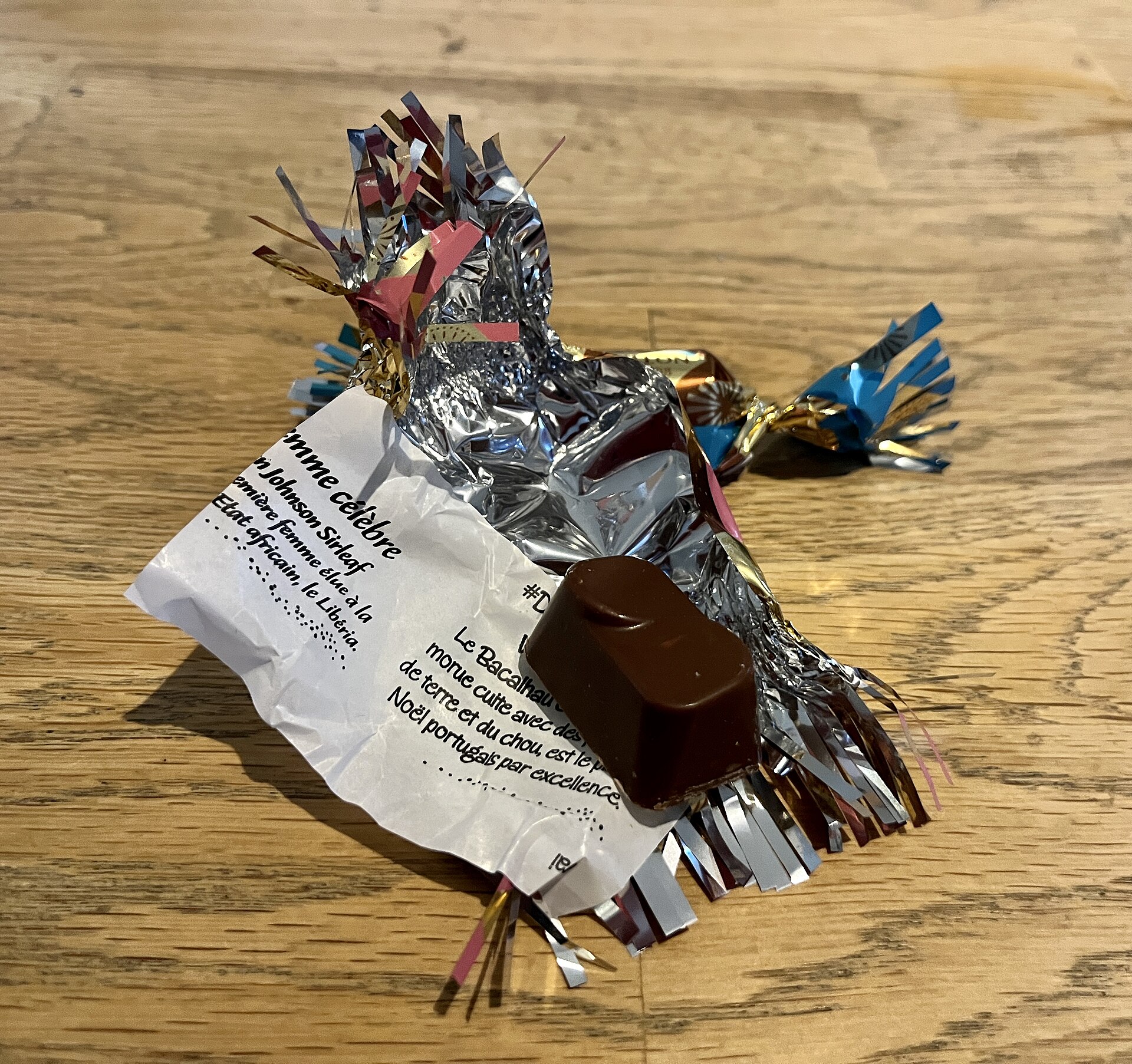
On Halloween, the man on the top floor wouldn't open up for Inés. The next day he came down to return her witch drawing and told me he's been hearing me talk to myself for years.
Chrysanthemums
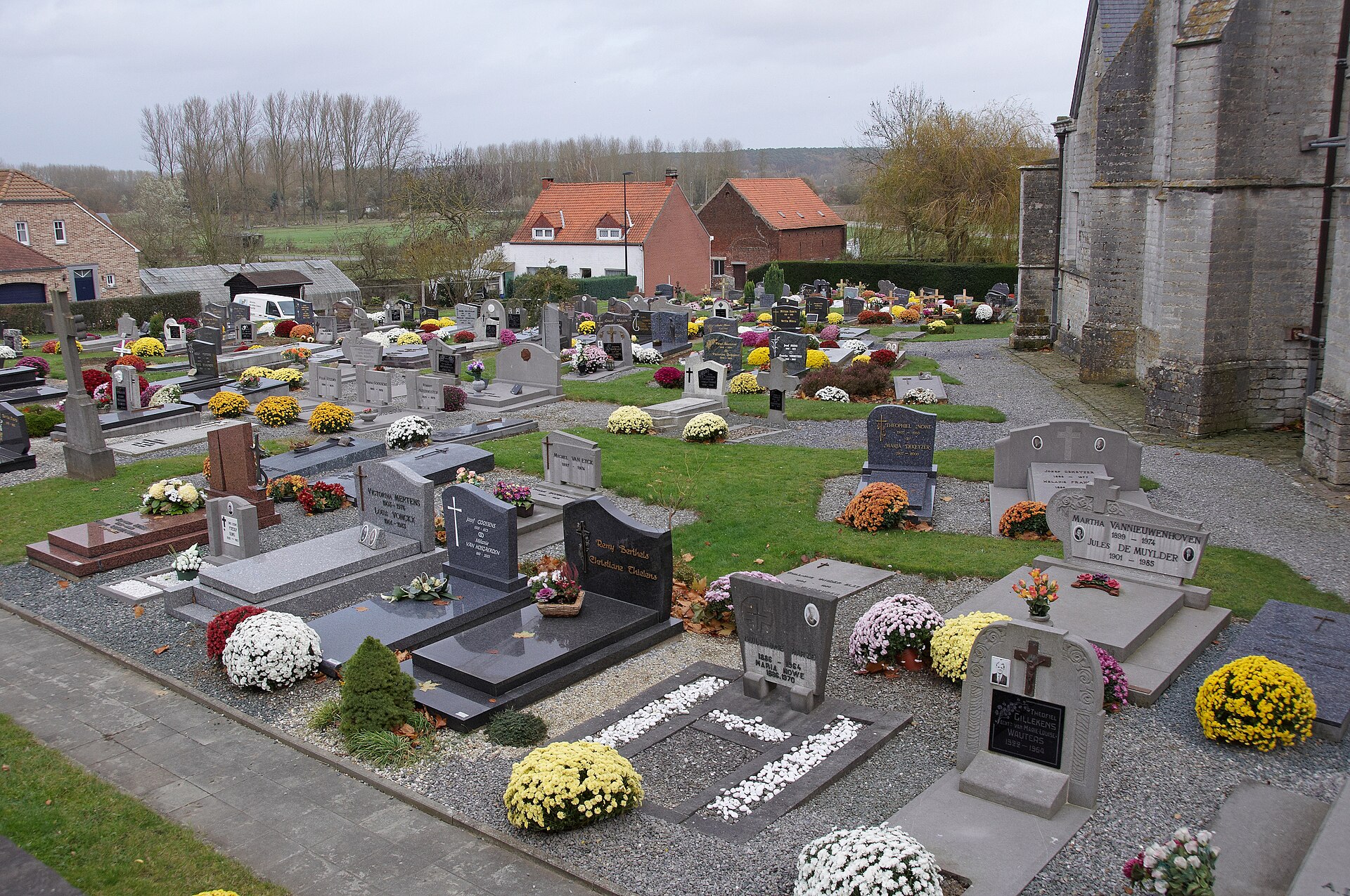
With the kids away in the Beaujolais, I went with Claire for the first time to clean her grandmother's grave before Toussaint, and thought about my father's plaque in Bogotá.

The house without them
Claire's parents took the kids for two nights to their house in the Beaujolais. Claire and I were left alone in the flat and didn't quite know what to do with the silence.