work · translation · neighbours
Four and a half cents
The agency wants me to fix what a machine has already translated, for less than half the rate. I tried it in silence, and my upstairs neighbour noticed first.
The email arrived at twenty to nine, while I still had Inés's breakfast cup in my hand. It was signed by Élodie, from the agency in Grenoble that has been sending me contracts for seven years and that every January wishes me "une belle année pleine de beaux projets". She was writing, very affectionately, to tell me that from January the texts would reach me already translated. That I would only have to check them. That this way I'd save time. The rate for checking was four and a half cents a word. Mine is eleven.
I read "only" three times. Then I did what I always do when something frightens me: I washed a pan that was already clean.
The test
There was a file attached, to give me an idea. Twelve pages of a contract for the storage of goods, French on the left and Spanish on the right, already there, waiting for me. I sat down at a quarter past nine fully intending, I confess, to find it dreadful. I wanted a tenant turned into a "hostage taker", a crane turned into the bird, some atrocity I could paste into my reply with three exclamation marks after it.
I didn't find one. The first page was fine. The second page was fine. On the third there was an odd comma and a stiff "the same" that I would have cut, and I was so pleased that I felt ashamed of myself. It's the same petty joy I had last week, with the Rosero novel and the pencil, except that this time the comma was supposed to feed me.
The thing about a text that is almost right is that you don't translate it: you watch it go by. Your eyes travel from left to right, your head says yes, yes, all right, yes, and your hand does nothing. On page seven I realised I had approved an entire clause without knowing who was paying whom. I went back. It was correct. That was the worst part.
Twenty past eleven
At twenty past eleven there was a knock on the door, with one knuckle. It was Monsieur Delorme, in his checked dressing gown, with the face of someone who has come down the stairs faster than is good for him. He looked me up and down, making sure nothing was missing, and asked if I was ill again.
I said no. I was working.
"Non," he said. "On n'entend rien."
You couldn't hear a thing. I had been sitting there for two hours and hadn't opened my mouth. Ever since I found out that he can hear me from upstairs, I sometimes feel a bit shy about reading aloud, and I read aloud anyway, because I don't know any other way. Today I hadn't needed to. You don't have to hear yourself to say yes.
I explained about the machine while I put the water on, and he listened, looking at the screen with his glasses on and then without them. He asked whether the machine read aloud. I said it did, if you wanted, there was a button. He pressed it himself. A very polite lady, with no age and no home town, began reading clause fourteen in Spanish, the one on damage and loss. Delorme, who doesn't understand a word, heard her out to the end with his head on one side. Then he switched off the speaker himself.
"Elle ne se trompe jamais," he said. She never gets it wrong. I couldn't tell whether that was praise. He drank his tinto, said that this one was the real stuff, and went slowly back up, holding the banister.
The stencil
At two I called my mother, for whom it was eight in the morning. I wasn't planning to tell her, and I told her before she had finished propping up the camera. She asked how much four and a half cents was in real money. I told her. She asked how many words I did a day. Claire asked me exactly the same thing by text ten minutes later, with the calculator already open, and her conclusion was that to break even I would have to check seven thousand words a day and never go to the toilet.
My mother drew no conclusions. She told me that once, at the nuns' school, the headmistress handed out cardboard stencils with holes in them for marking the chemistry exams. You laid the stencil over the sheet and counted the crosses that showed through. Thirty exams in ten minutes. I asked if they'd been any use. "Enormously," she said. "But I had to read them all again at night, because I didn't know who had understood." I asked if they paid her for the night. She laughed so much that she dropped the phone.
I haven't answered the email. Élodie wants a reply before Monday, and the boiler, Claire's car and Tomás's trainers have a fairly clear opinion about what I ought to say. Nothing has come up in the flowerpot on the window ledge. At a quarter to five, before the children got home, I deleted the right-hand column of clause fourteen and started it again, from the French. I said it once. I changed it. I said it again, more slowly, in my lawyer's voice.
Upstairs, the radio went down.
Keep reading

On Saint Catherine's Day
A French saying claims that on 25 November any stick will take root. Inés opened her box of conkers, found one with a tail, and we had to find it a pot.
The drying rack
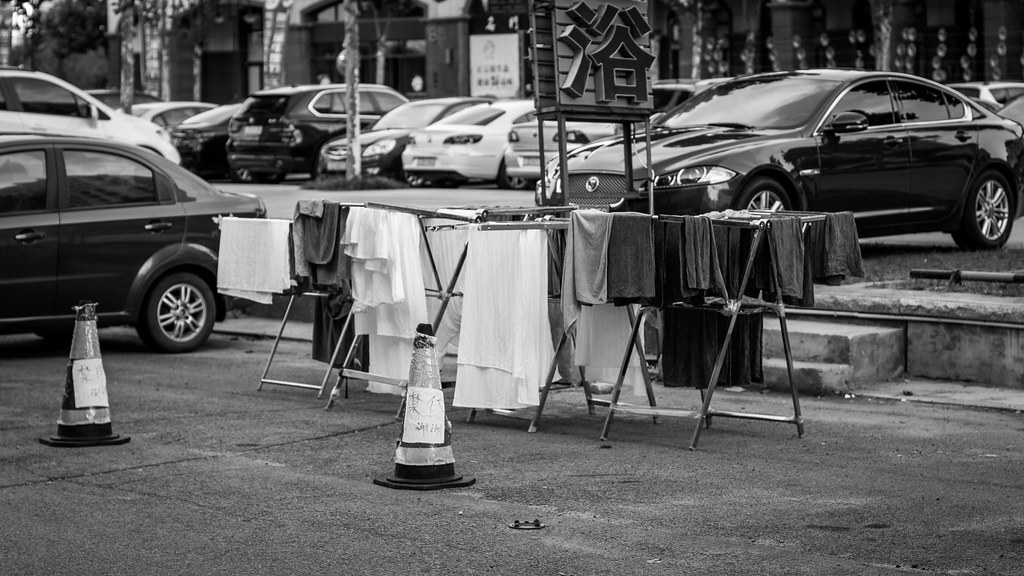
In November nothing ever dries in Lyon. A folding rack in the living room, one of Inés's socks gone missing, and my mother's sheets in the sun on a Bogotá rooftop.
Lumignons
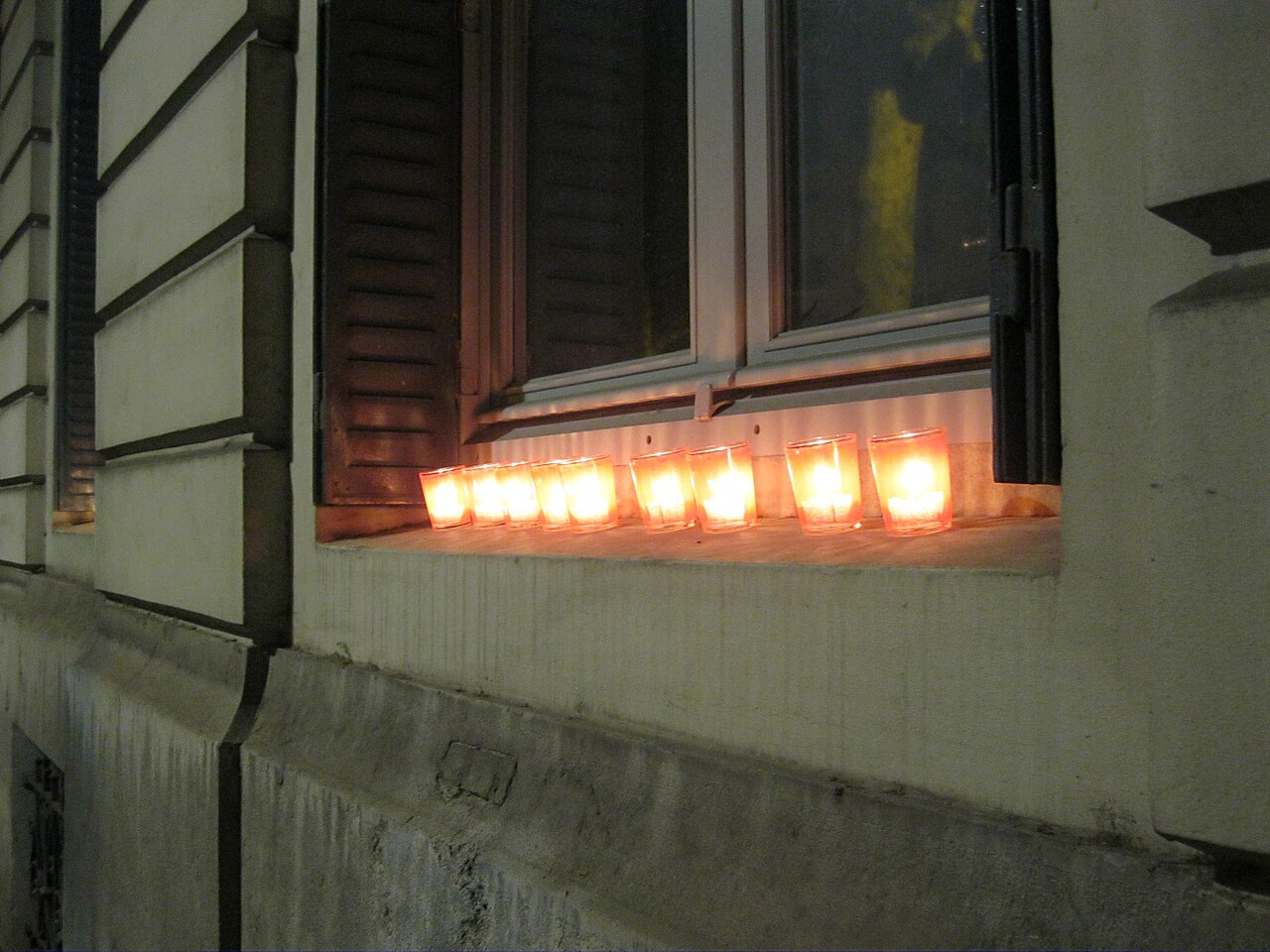
In Lyon, on 8 December, people put candles in their windows. This year Inés brought home a little glass jar to paint, and I thought of the velitas back in Bogotá.