shoes · dad · neighbourhood
New soles
A hole opened up in the only serious shoes I own, the ones my father chose for my wedding. In the middle of Black Friday, I took them to a cobbler.
It's three hundred metres from the school gate to the bakery, and this morning that was all I needed to find out that my left shoe had a hole in it. My sock knew first. A thread of water got in under the big toe, then an entire puddle, and by the time I reached the counter I was ordering the baguette on one leg, like a heron.
These aren't just any shoes. They're the brown leather ones, the ones I wore two and a half weeks ago to go to the Prefecture, the same ones I wear to funerals, meetings with publishers and anything else where I need to look like a grown man. Today called for none of that. I put them on because my trainers were still wet.
The windows on the Grande Rue had black signs saying "Black Friday", pronounced here with an r that takes all the fun out of it. The shoe shop on the corner had ankle boots at thirty-nine ninety. I stood looking at them with a soaked sock and came very close to going in.
El Restrepo
I didn't go in, because of my father. In 2011, a month before the wedding, I was planning to get married in a pair of loafers I'd had since university. He didn't argue. The following Saturday he asked me to come with him on an errand, and the errand was El Restrepo, the neighbourhood where Bogotá makes and sells shoes, whole blocks of shop windows smelling of glue and leather. We went into about fifteen shops. In each one he picked up a shoe, bent it in half, dug his nail into the sole and put it back without asking the price. In the sixteenth he said: "These." They were stitched. "These you can resole," he explained. "The others you throw out."
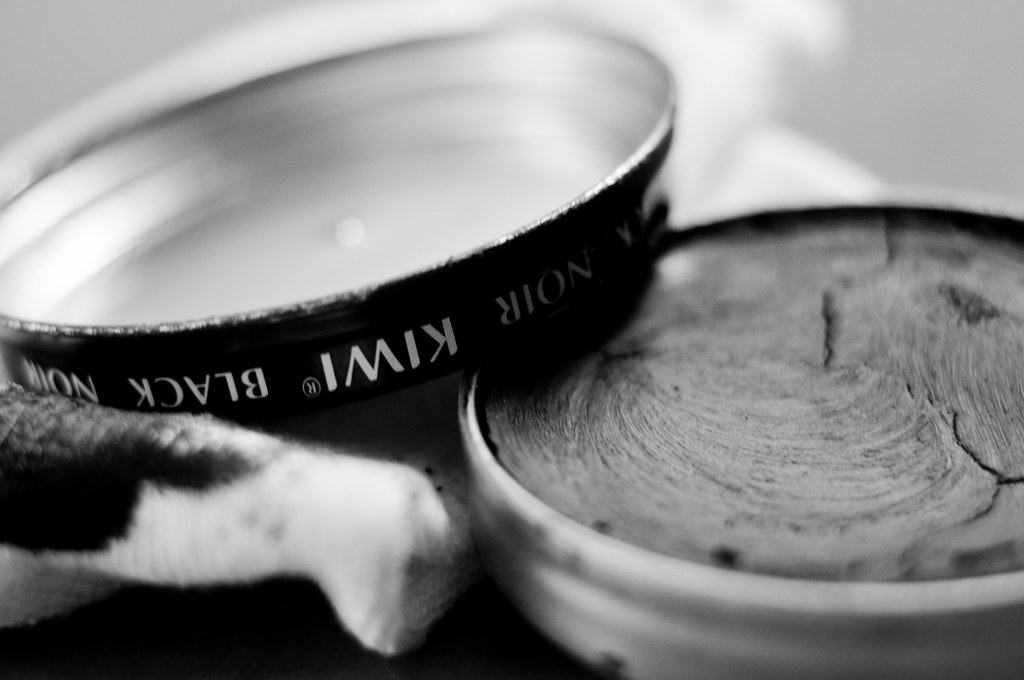
He paid for them, although I was thirty-one and had the money to pay for them myself. The night before the wedding he polished them at the dining table, on top of an open copy of El Tiempo, with his usual tin of Cherry shoe polish and the radio tuned to a match that Santa Fe were losing. He died the following year. I haven't bought a pair of leather shoes since.
Monsieur Sarkis
The cobbler on rue Dumenge works in a shop as wide as a lift and also cuts keys, which I imagine is what actually feeds him. I went at eleven, with my damp trainers on my feet and the others in a shopping bag. Monsieur Sarkis took the left one, bent it in half, dug his nail into the sole. I had to look at the keys for a while.
"Cousu," he said. Stitched. And then, tilting it to the light: "Et jamais ciré." And never polished. I told him never was a big word. He showed me the cracks across the top, white and dry as a heel in January, and asked how big. I didn't know. Since before Inés was born?
New soles would cost fifty-eight euros. I did the sum I've been doing for everything since yesterday: that's thirteen hundred words at four and a half cents. At my rate it's five hundred and something. Élodie's email is still unanswered and it wasn't the best day to get sentimental about a fifteen-year-old pair of shoes. I asked him if it was worth it. He shrugged. "Pour des chaussures neuves, non. Pour celles-là, oui." For new shoes, no. For those, yes.
Come back at six. He also sold me a tin of brown cirage, a brush and a cloth, eleven euros, without my asking for them or daring to say no.
On the newspaper
At six they were ready, a pale sole smelling of new underneath a very old shoe. After dinner I opened Le Progrès out on the kitchen table. Claire, who hasn't seen a shoe being polished in this house in twelve years, stayed leaning against the fridge without a word, mug in hand.
Tomás turned up in his pyjamas to ask what that smell was. I explained that you put on just a little, in circles, let it dry and then brush fast, without pressing. I heard myself say "without pressing" in a voice that wasn't entirely mine. He wanted to do one. Since he has no leather shoes, I gave him the left one, and he stuck his arm into it up to the elbow, exactly like a puppet, and had it talk in French for a good while before getting down to work.
He used half the tin. He left two prints on the fridge, one on his ear and one on the sports pages. He asked if Grandpa Hernando did it like that. I told him Grandpa didn't use so much.
The shoes are by the door, on a sheet of newspaper. The left one shines a good deal less than the right. I'm not going over it.
Keep reading
Four and a half cents
The agency wants me to fix what a machine has already translated, for less than half the rate. I tried it in silence, and my upstairs neighbour noticed first.
On Saint Catherine's Day
A French saying claims that on 25 November any stick will take root. Inés opened her box of conkers, found one with a tail, and we had to find it a pot.
The drying rack
In November nothing ever dries in Lyon. A folding rack in the living room, one of Inés's socks gone missing, and my mother's sheets in the sun on a Bogotá rooftop.