paperwork · lyon · languages
Assimilation
Twelve years after arriving in Lyon I went to the Préfecture for my French citizenship interview. They asked about Claire, about the Republic, and why. The last one was the hard part.
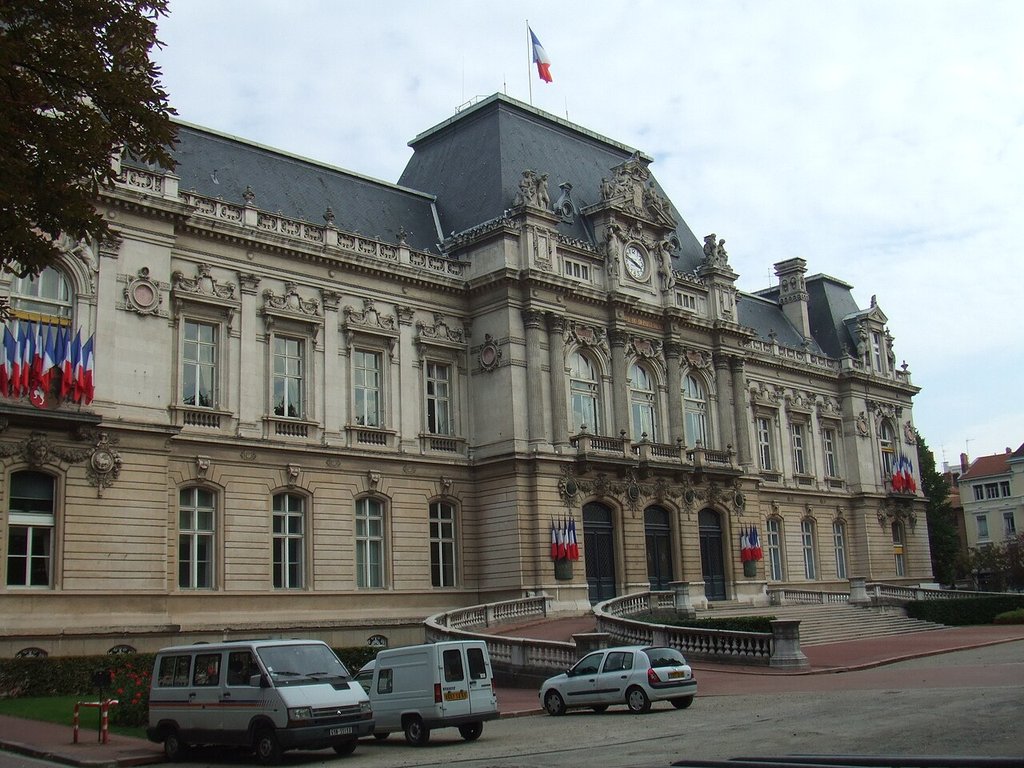
The letter came in September and I put it on the fridge, under the Virgin of Chiquinquirá magnet my mother gave me, next to the to-do list. It said I was expected on Tuesday 10 November at a quarter past nine at the Préfecture du Rhône, "pour un entretien d'assimilation". I read the word three times. I've spent twenty-five years working with French words and that one had never been applied to me.
I've been able to apply for citizenship since we got married. Claire would remind me now and then, without pushing, the way you'd remind someone the car needs new tyres. I always had something more urgent. The truth is I didn't want to fill in a form so that someone could tell me whether I belonged here yet. In March, after a year in which I'd had to renew my residence card in a queue that started out on the pavement at six in the morning, Claire opened the laptop on the kitchen table, set it in front of me and said: "Ce soir". And that night it was.
The paperwork about the paperwork
The strangest part was having to prove I speak French. I taught French in Bogotá for eight years. I translate from French for a living. But my degree from the Nacional didn't count, because it's in Spanish, so in April I sat a language test at a centre in Part-Dieu, between a twenty-year-old Afghan lad and a Romanian lady who asked to borrow a pencil. I got the top level. I showed it to Claire with a pride that made no sense at all.
The second strangest part was my birth certificate. It had to be done by a sworn translator, and I'm not sworn: I translate manuals for cheese-packing machines. I paid Martine, a colleague in Villeurbanne, forty-five euros to translate the page that says I was born at the Clínica de Marly in 1980, son of Hernando Rojas and Cecilia Vargas. When she sent it, I read my parents' names in French, with her stamp and her signature, and sat looking at them for a while. It was like seeing them dressed up for a wedding they hadn't been invited to.
The lady on the third floor
This morning I dropped the kids at the school gate, Tomás on his own from the corner now, and crossed the Rhône on foot over the Pont Lafayette. It was a dry cold. The Préfecture is one of those buildings the nineteenth century put up so you'd arrive feeling small: steps, columns, a clock up top. The flags were already out on the balconies for the 11th of November. Inside, though, it was all office: blue plastic chairs, a ticket machine, a sign asking you to switch off your phone.
I was seen by a woman of about sixty, short white hair and a green cardigan, in a cubicle on the third floor with a plant someone didn't water often enough. She was kind in an efficient way. She asked when I'd met Claire, where we lived, what the children were called and which school they went to. Then she asked what we'd had for lunch on Sunday. I said lentils. She wrote down lentils.
Then came the Republic. The three colours, the date of the Revolution, what laïcité means. She asked about a French writer I liked and I said Apollinaire, and for some reason I recited the first two lines of "Le pont Mirabeau", the poem I used to make the engineers on 72nd Street learn by heart, which they didn't want to. She smiled for the first time. She said her father knew the whole thing.
The last question
She had the last question written on a sheet of paper, and she read it out: "Pourquoi souhaitez-vous devenir français ?"
I'd prepared an answer. I'd had it in my head since Sunday, with an introduction and three arguments, like a good exam essay. Voting in the neighbourhood where I pay my taxes. No more queues at six in the morning. Having the same passport as my kids when we travel. It was a good answer and it was true.
I didn't give it. I told her my children are French and that I speak to them in Spanish every day, since they were born, and that they answer me in French. That I've been in that conversation for ten years. That it seemed fair, at this point, to be on both sides of the table.
She looked at me for a moment over her glasses. She wrote something long, longer than the lentils. Then she told me the file would follow its course, that a letter would come, that it could take months, and she shook my hand.
I came out at ten past ten. The clock up top said ten past ten too, which I took as a courtesy. I walked back over the same bridge. Below, the Rhône ran fast and green, in much more of a hurry than the Saône, as if it had an appointment.
On Sunday, when I told my mother I had the interview, she went quiet on the screen and then asked if that meant I'd stop being Colombian. I explained it didn't, that Colombia lets you keep both. She said "ah, bueno" and went back to talking about the neighbour. Tonight at dinner, Inés wanted to know whether, once I was French, I'd speak to them in French, like everybody else.
I told her no, mi amor. Eat your soup.
Keep reading

The raclette question
The first raclette of the year at some friends of Claire's in Villeurbanne. A new guest found out I'm from Bogotá and said the usual word. Tomás was listening.

As far as the corner
Tomás asked to walk to school on his own, like the other kids in his year. I said yes, then followed him half a block behind, hiding behind cars, the way my father once followed me.

The absent-minded cousin
My mother's neighbour's cousin landed in Paris with two kilos of coffee for me. He couldn't come to Lyon, so I took the train to meet him at the Gare de Lyon.