home · neighbours · autumn
The pruning
The building manager had the courtyard chestnut tree pruned, the one I've looked at from my desk for twelve years. I lost a day's work and gained neighbours I didn't know I had.
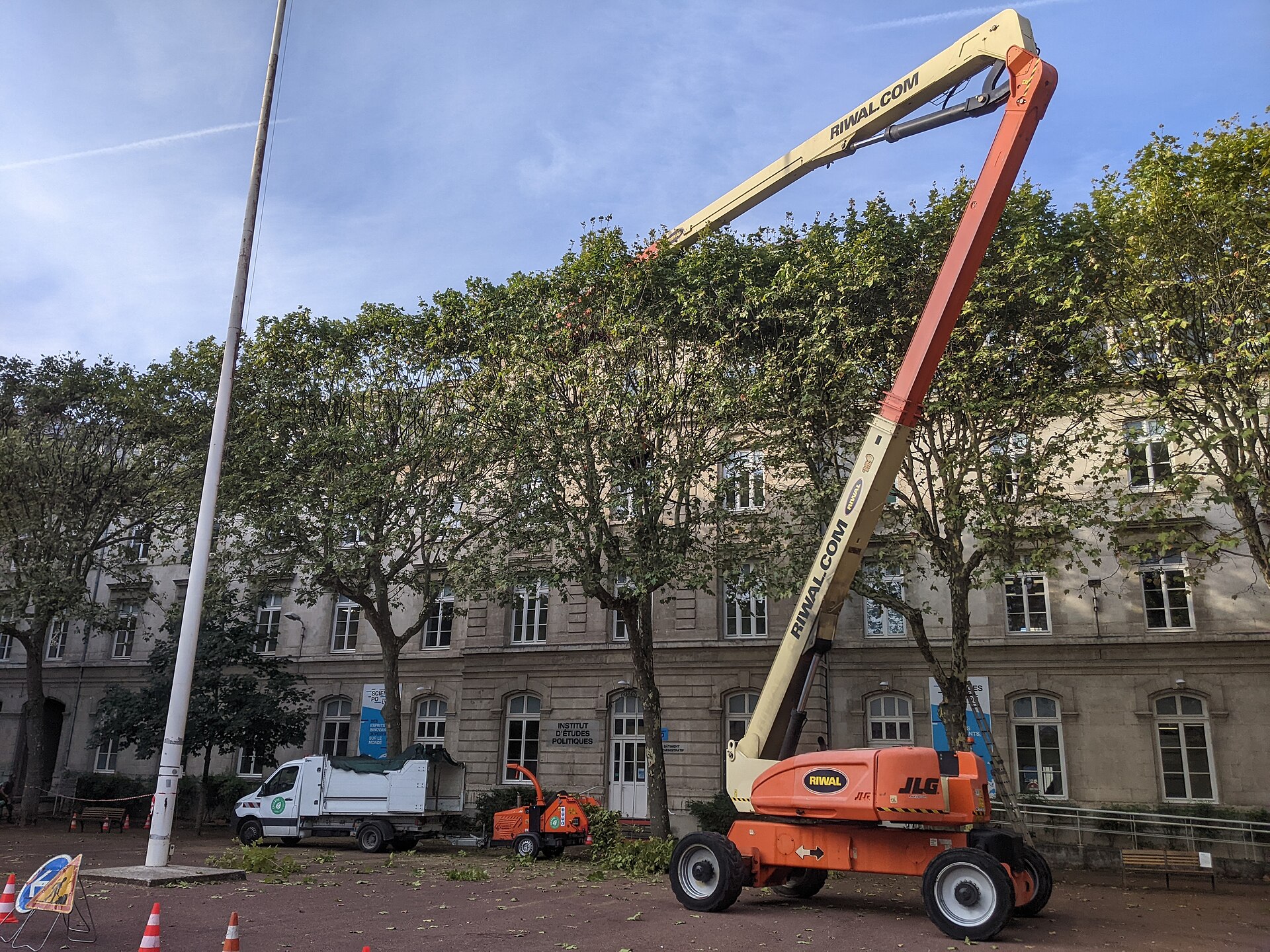
The notice went up on Monday on the corkboard in the entrance hall, between the one about the owners' meeting and one asking, for the third time, that people stop leaving prams under the stairs. The building manager wrote it in his usual style, which is that of a tenancy agreement in a bad mood: "Élagage du marronnier de la cour. Jeudi 12 novembre, à partir de 8 h. Merci de ne pas stationner de vélos le long du mur." I read it on my way up with the bread and didn't give it a second thought. I assumed they'd come and cut a couple of branches, the ones that brush the first-floor windows, and be gone by ten.
I've been working in front of that tree for twelve years. I've mentioned it so often here that it's practically a character by now: the chestnut that isn't a chestnut, the one with the conkers you can't eat, the one I stare at when a sentence won't come. My desk is up against the window precisely because of it. When we moved into this flat, Claire wanted the desk on the other wall, where the light is better, and I said no, I needed to see something alive while I translated. She said that was very Colombian. I don't know if it's Colombian, but I held my ground.
The rope men
At ten past eight two young guys turned up in a white van with a green leaf painted on the side. One was big and bearded and stayed on the ground; the other was skinny, with a ponytail and an orange helmet, and he put on a harness and went up the tree the way you'd go up the stairs at home. No ladder. He threw a rope over a high branch, clipped himself on and climbed, and ten minutes later he was sitting in the fork at fourth-floor height with a small chainsaw hanging from his belt like a handbag.
I had a manual for a bottling machine due on Friday, eighty pages of valves and level sensors. I didn't translate a single line. First because of the noise, which comes in through the glass and through your teeth, and then because I couldn't stop watching. The young guy would tie off a branch, cut it, and the one below would lower it slowly on the rope, so that it landed in the courtyard almost gently, in one piece, with its last yellow leaves still on.
At around eleven Monsieur Delorme, from the top floor, came down with his checked dressing gown on over his outdoor clothes. He stood at the courtyard door with his hands behind his back, like an engineer inspecting a site he disapproves of. Then he rapped on my window with one knuckle. I opened it. He told me the tree had been planted by the previous owner of his flat in 1971, that when he moved in, in '84, it was already tall, and that what they were doing wasn't pruning, it was amputation. He said it without anger, as a matter of record. I asked if he'd like a tinto. He said yes, the one from last time, the strong one. We drank it on either side of the open window, him outside and me in, watching the ponytailed climber, who was by then eating a sandwich on a branch fifteen metres up, legs dangling.
The eucalyptus in the park
Watching the branches come down, I remembered something I'd completely forgotten. In the park opposite my mother's building in Chapinero there was a row of old eucalyptus trees, the huge kind they planted all over the savannah last century because they grow fast, and that everyone later wanted cut down because they fall over. When I was about ten, Tomás's age, some men from the city came to fell two that were leaning. My father went down to the street in his slippers, like Delorme, talked to them for a while and came back up with an armful of branches. He put them in vases, in the bathtub, behind the door. For two weeks the whole flat smelled of eucalyptus, of a cold getting better, of rain on Carrera Séptima. My mother complained about the leaves on the floor and never threw a single one away.
The marronnier doesn't smell of anything. Wet wood, at most. Still, at four o'clock I went down and asked the bearded one if I could keep a small branch. He gave me a funny look, shrugged and trimmed one for me with a pair of loppers, about the length of my arm. It's in a glass jar on my desk now, next to the dictionary. I don't know what I'm expecting it to do.
What was behind it
At a quarter to five the kids came home from school. Inés stopped dead at the courtyard door, her backpack still on, and said: "Il est tout nu." And it was true: the tree had been cut back to a trunk with six or seven thick arms, all lopped at the same height and ending in pale stumps. It looked like an open hand that someone had stopped raising halfway. Inés asked me whether it would have chestnuts again. I said yes, in September, these trees are tough. Tomás said he already knew that, they'd done it in science. They haven't, but I let it go.
That evening I sat down to claw back some of the bottling-machine manual. And that's when I noticed. For twelve years, what I saw behind the chestnut from my desk was leaves in summer and branches in winter, so many of them they made a kind of curtain. Now there's no curtain. Across the courtyard, in the building opposite, there's a row of lit windows I had never really seen. On the second floor a man was practising something on a cello, the same phrase over and over, starting again whenever he got it wrong, exactly like me with mine. And on the third, straight across from me, a woman of roughly my age was ironing shirts with the window ajar.
At some point she looked up. My lamp was on too. For a second we just looked at each other, each in our own window, over the cut-off arms of the chestnut tree. Then she went back to her shirt and I went back to my valves, both of us concentrating very hard, as if we'd been working the whole time.
Keep reading
Reading the names
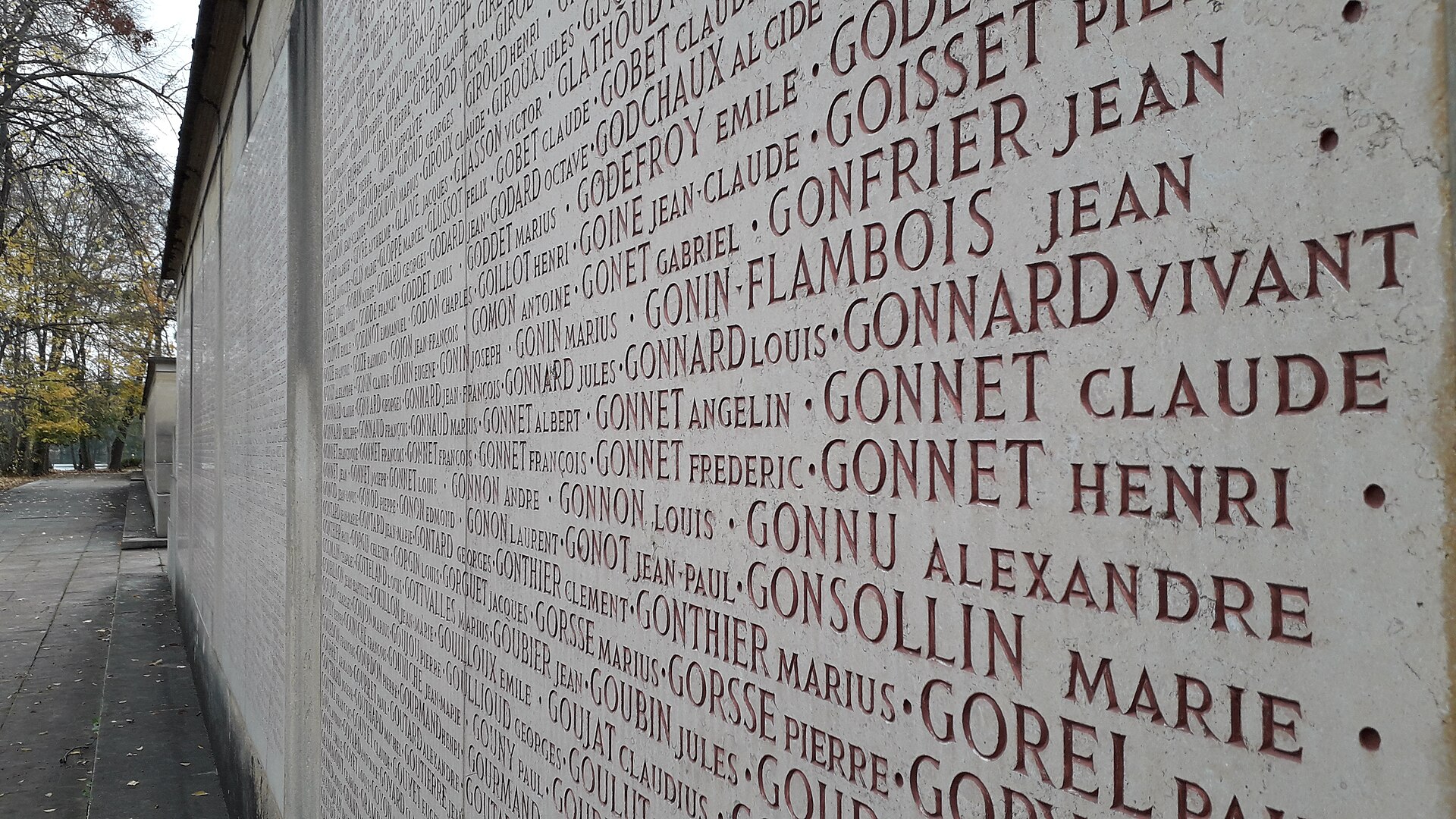
This 11 November Tomás was asked to read four names at our neighbourhood war memorial. We rehearsed in the kitchen, and one of the names asked him a question.
Assimilation
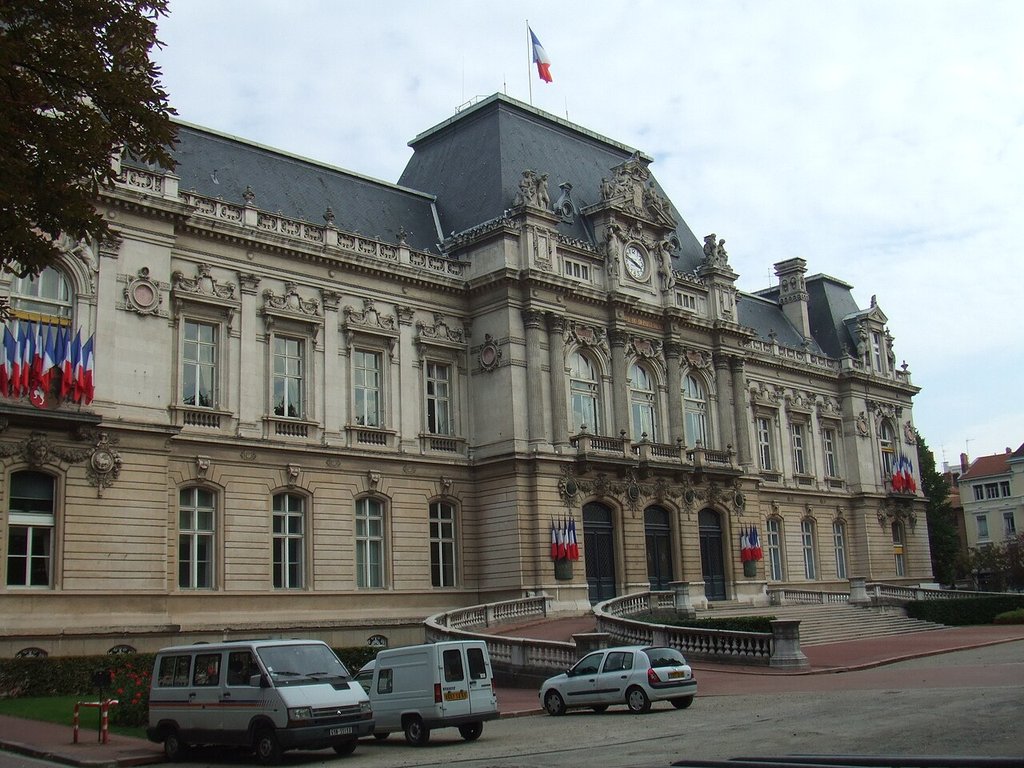
Twelve years after arriving in Lyon I went to the Préfecture for my French citizenship interview. They asked about Claire, about the Republic, and why. The last one was the hard part.

The raclette question
The first raclette of the year at some friends of Claire's in Villeurbanne. A new guest found out I'm from Bogotá and said the usual word. Tomás was listening.