kids · lyon · memory
Reading the names
This 11 November Tomás was asked to read four names at our neighbourhood war memorial. We rehearsed in the kitchen, and one of the names asked him a question.
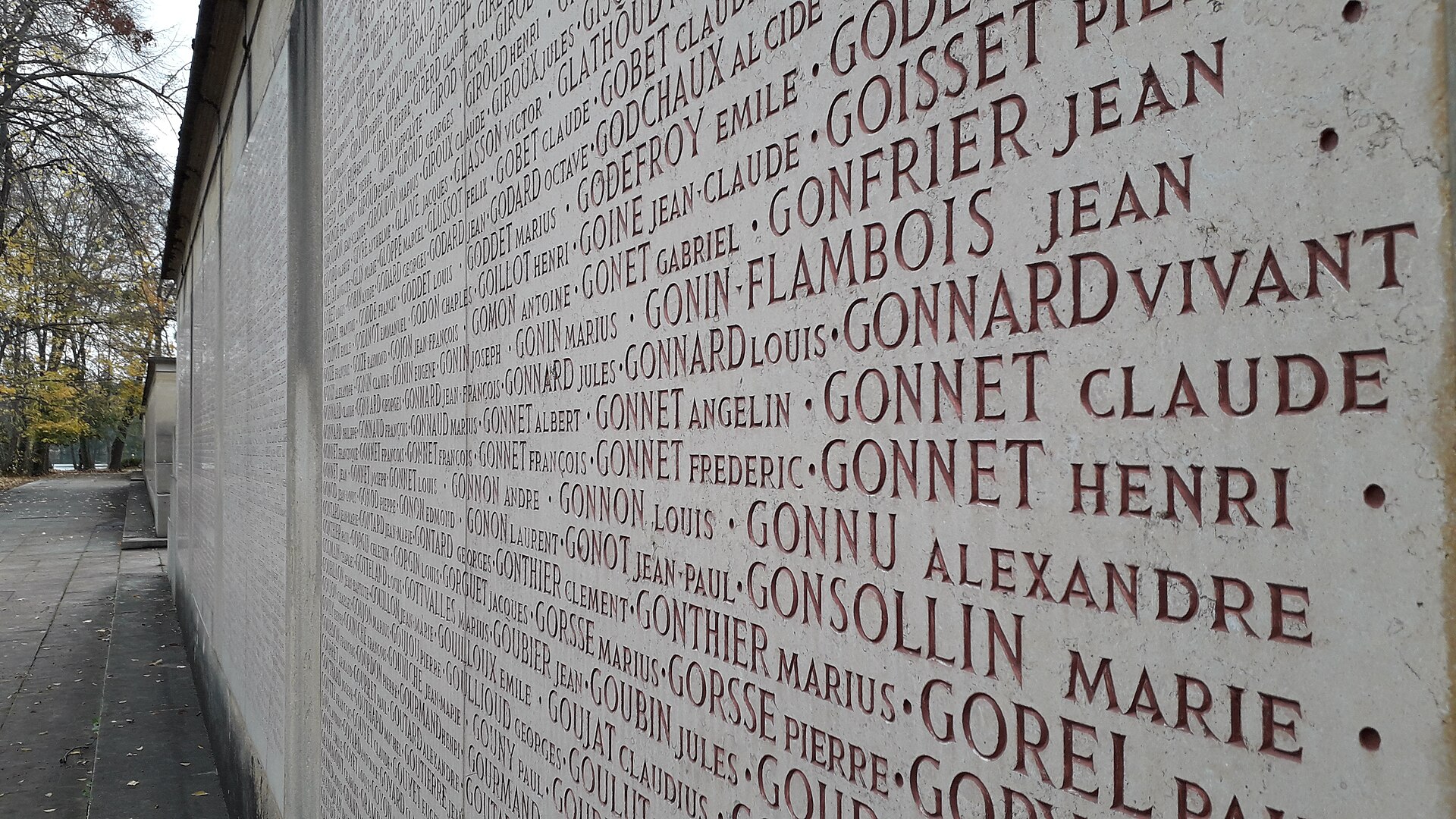
Two weeks ago Tomás came home from school with a sheet of paper folded in four inside his home–school notebook. His teacher had picked six children from CM2 to read the names at the 11 November ceremony, at the neighbourhood war memorial, and he was one of the six. He had four names. They were typed, surname in capitals, the way they are on the stone: BERTHET Louis, CHAMBARD Marius, GIMENEZ Antoine, PERRIN Claude.
Claire was pleased in a way I hadn't seen before. She told me she'd read names too, in 1993, in her parents' village in the Beaujolais, and that she still remembers the list being so long it was shared out among the whole class, and that in a village of four hundred people there were three surnames that came up five times each. "Des frères," she said. "Des cousins." I had no memory to offer back. At my school in Bogotá, 11 November was a bank holiday that got shifted to the Monday, like all of them, and the only thing anyone celebrated was not having class.
Rehearsal in the kitchen
Last night after dinner, with my own interview at the Préfecture still going round in my head, Tomás asked me to listen to him. He stood next to the fridge, holding the sheet in both hands, very straight, and read. After each name, he explained, everybody answers together, "Mort pour la France", so I had to be everybody.
I did it. He'd say "Louis Berthet" and I'd say "mort pour la France" in the deepest voice I own, from the table, with a tea towel over my shoulder. Inés, already in her pyjamas, joined the chorus and said it with an enthusiasm that was not appropriate. We rehearsed four times. Tomás didn't make a single mistake. He reads French like what he is: a kid from here. I earn my living correcting other people's French, and I had nothing to correct, and I caught myself hunting for something, anything, a silent s that wasn't silent enough, just to feel useful.
On the fifth go he stopped at the third name. He read it the French way, as he had been doing all along: "Antoine Gimenèze", soft g as in "gilet", the z at the end pronounced. Then he looked at me.
"C'est espagnol, ça ?"
Antoine
I told him yes, almost certainly. That lots of people had come to Lyon, and to the rest of France, from Spain long before the war, to work in the factories and on the land, and that their sons were already French by the time they were sent to the front. That Antoine most likely had a father called Antonio. Tomás kept looking at the sheet. Then he asked me how you say the name "properly", and he said properly in French, as if there were a correct way and another one that was only the way they say it here.
I told him that in Spanish it would be Jiménez, with the j from the back of the throat and the stress on the i. He repeated it. It came out strange, very strange, the j far too strong, like he was clearing his throat, and he laughed at himself. He tried again. Inés tried too and made a noise like a cat. Claire, from the sofa, said he should read it at the memorial the way it was written, that the man had probably been called that way at school already, and she was right, and I didn't say anything because she was right.
Eleven o'clock sharp
This morning the cold was clean, white sky, the kind that tells you in Lyon that the fake autumn is over. The four of us went down to the square at half past ten. The flags were already out, a few old men in berets and medals, a young man with a trumpet in its case, the mayor of the arrondissement with his tricolour sash and a folder. The six CM2 kids stood in a row next to the memorial with their sheets, the teacher behind them like a mother hen.
They read in order. Tomás was fourth. When his turn came he raised the sheet, said "Louis Berthet" in a smaller voice than he'd used in the kitchen, and the whole square answered "Mort pour la France". Inés and I said nothing: we forgot. It was very different hearing it from a hundred people instead of from the kitchen table. Marius Chambard. Mort pour la France.
Then came the third. Tomás paused, a tiny pause, the kind only a father notices, and said "Antoine Gimenez", the French way, as it was written, as his mother had told him. But the g didn't come out quite soft. It came out a little scratchy, halfway there, as if something from the kitchen had stayed caught in his throat. Nobody in the square noticed. Mort pour la France, everyone said.
Claire squeezed my hand. I was looking at Tomás's shoes, his Sunday ones, which were already a bit too short for him.
Then the trumpet played, and it sounded sadder than I was ready for, and we had the minute's silence. A minute is very long when a hundred people stand still in a cold square. You could hear the traffic on the boulevard, a dog, a pigeon that landed on the bronze soldier's helmet and that nobody dared to shoo away. Inés kept tugging at my sleeve to ask me something and I kept shaking my head, and she, incredibly, waited.
When it was over she asked me, in a whisper, whether Antoine also had a dad called Antonio. I said he probably did. She stood looking at the stone, where the name was, in capitals, between a Gauthier and a Girard, a little more worn than the others by the rain.
Keep reading
Assimilation
Twelve years after arriving in Lyon I went to the Préfecture for my French citizenship interview. They asked about Claire, about the Republic, and why. The last one was the hard part.

The raclette question
The first raclette of the year at some friends of Claire's in Villeurbanne. A new guest found out I'm from Bogotá and said the usual word. Tomás was listening.

As far as the corner
Tomás asked to walk to school on his own, like the other kids in his year. I said yes, then followed him half a block behind, hiding behind cars, the way my father once followed me.