cooking · family · autumn
My mother doesn't do measurements
One Sunday in October I finally opened the jar of guascas and asked my mother, over a video call, to dictate her ajiaco. I couldn't get a single gram out of her.

On the to-do list stuck to our fridge with a magnet, between "renew Inés's passport" and "call the boiler guy", there's a line that has been there for more than a year: "Get my mother's ajiaco down on paper". I wrote it after a phone call in which she told me, the way you'd mention the weather, that she'd forgotten to turn off a pot and the neighbour from the second floor had come up because of the smell. Nothing happened. But the line appeared on the fridge that same night, in my hurried handwriting, and I've looked at it every morning since, while the coffee heats up.
On Sunday I finally crossed it out. Or almost.
The jar
In Lyon, autumn arrives all at once. One day the chestnut tree in the courtyard is green, and the next it wakes up with half its leaves on the ground and the spiny husks split open on the concrete, which Inés collects wearing gardening gloves as if they were dangerous animals. It starts getting dark early, the flat smells of heating switched on for the first time, and I start craving soup, which is my body's way of missing Bogotá without making a fuss.
I had both jars of guascas in the cupboard, next to the salt: the one Fernando found for me at his cousin's shop, and the one my mother slipped into my suitcase wrapped in one of Tomás's sweatshirts. I hadn't opened either of them. It felt a bit like opening a good bottle without an occasion. On Sunday I decided the occasion was that there wasn't one. I opened my mother's jar and the kitchen filled with a green, earthy smell, a bit like scrubland, nothing like anything you find in France. Claire poked her head in from the living room and said, "Ah. Ça sent ta mère." It smells like your mother. I'm not sure whether she meant the herb or something else, but she was right.
I propped the laptop on the counter against the bread bin and called Chapinero.
The dictation
My mother answered with the camera pointed at her forehead, as always, and with her apron on, even though it was ten in the morning there and she wasn't cooking anything. I explained that I wanted to write the recipe down properly, with quantities, so it would last. She was quiet for a second, then said: "Last for what, mijo? I'm right here."
I didn't answer that. I asked her how much papa criolla.
"Whatever the pot asks for."
I asked how much chicken. "A good breast and a few thighs, depends how many of you there are." And how much water? "Until it's covered." And how long? "Until the criolla falls apart. You'll see it." And the guascas, how many spoonfuls? That made her laugh. "A handful. At the end. Too much and it turns bitter." I was writing in one of the notebooks I use for translations, the one with the black cover, and the page was filling up with phrases that in any other document I'd have flagged with a question mark in the margin: whatever the pot asks for, until it's covered, you'll see it.
Halfway through the call Inés turned up, climbed onto a stool and started peeling potatoes with a surgeon's care, leaving half the skin on. My mother saw her and spoke straight to her, slowly, the way she did in August. She told her the pastusa gets cut big and the sabanera medium, and the criolla goes in whole because it's the one that sacrifices itself. Inés asked in French what "sacrifica" meant. My mother, who doesn't speak French, understood the question anyway and answered: "It melts away so the others taste good." Inés nodded very seriously. I didn't translate a thing. There was no need.
What doesn't fit in the notebook
There's no papa criolla in Lyon, or at least I haven't found any. I used some small yellow potatoes from Noirmoutier that I'd bought on Saturday from the young man from Givors who took over Fernando's stall. He's nice, his name is Mehdi, he weighs everything to the gram and he doesn't set anything aside for me. When I asked him which potato fell apart the most, he looked at me as if I'd asked him a question in philosophy. I bought the smallest ones and hoped for the best.
They didn't fall apart completely. The ajiaco came out paler than my mother's, thinner, with the corn cut into rounds because that's how I'd bought it. I threw in the handful of guascas at the end. Tomás added cream, capers and avocado, all together, again, and Claire had two bowls without saying a word, which from her is enormous praise. My mother stayed on the screen while we ate, the laptop now on the dining table, watching us from a strange angle and asking every so often, "Did it come out nice and thick?" I said yes. I lied a little.
That night I typed up the notebook page on the computer, with a title and everything. I tried to turn what she'd said into grams, cups, minutes. I wrote "1 kg papa criolla (approx.)" and deleted it. I wrote "approx. 45 min" and deleted that too. In the end I left her phrases exactly as she'd said them, in quotation marks, because anything else would have been translating her, and she's the one thing I don't want to translate.
I crossed out the line on the fridge with a single stroke, the kind that still lets you read what was underneath. The jar of guascas is open in the cupboard now, with a rubber band around the lid. There's more than half left. I don't know how many spoonfuls. A handful, two. Whatever the pot asks for.
Keep reading
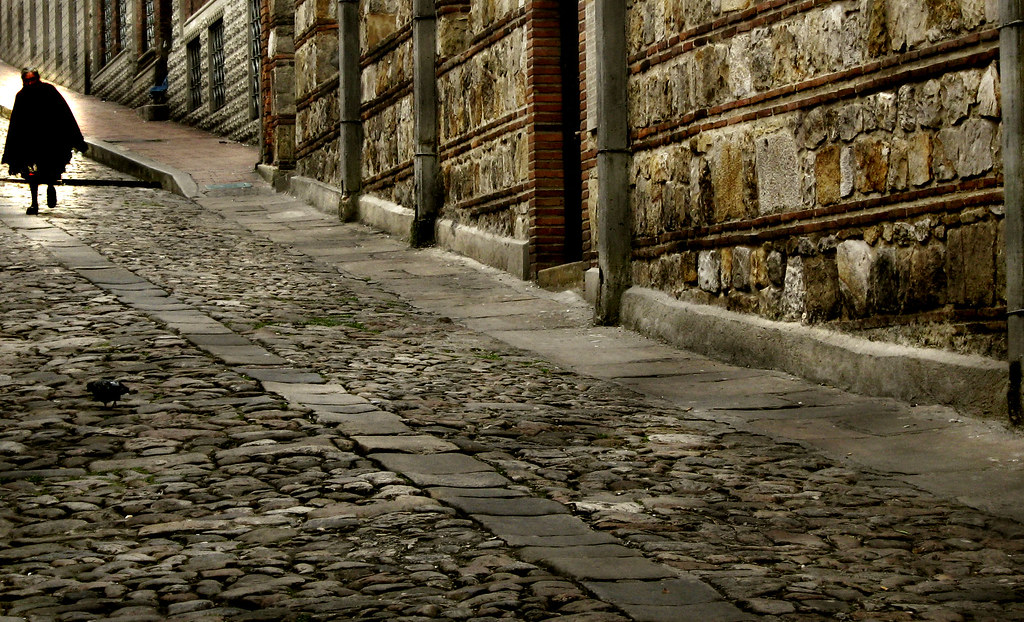
Bogotá again, in August
Three weeks in Bogotá with Claire and the kids: the cold of the high plain, my mother a little smaller, an ajiaco, and a question she had never asked me quite like that.
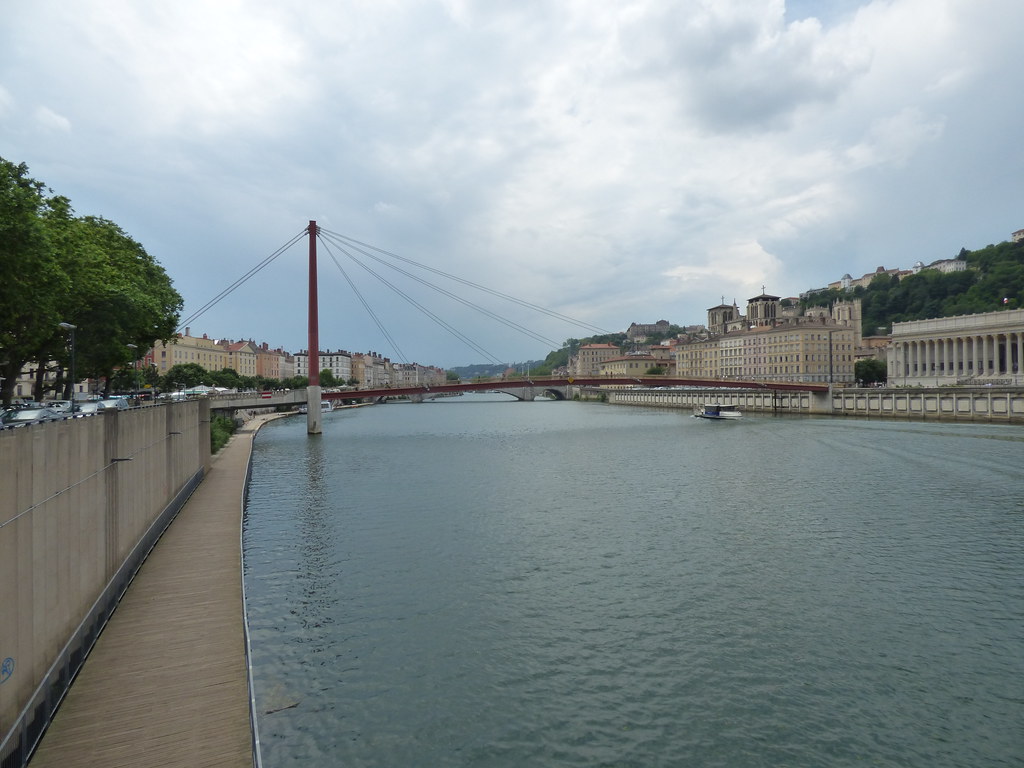
Fernando's Saturdays
After my run along the Saône I always end up at the same stall in the quai Saint-Antoine market. This Saturday Fernando told me he was leaving.
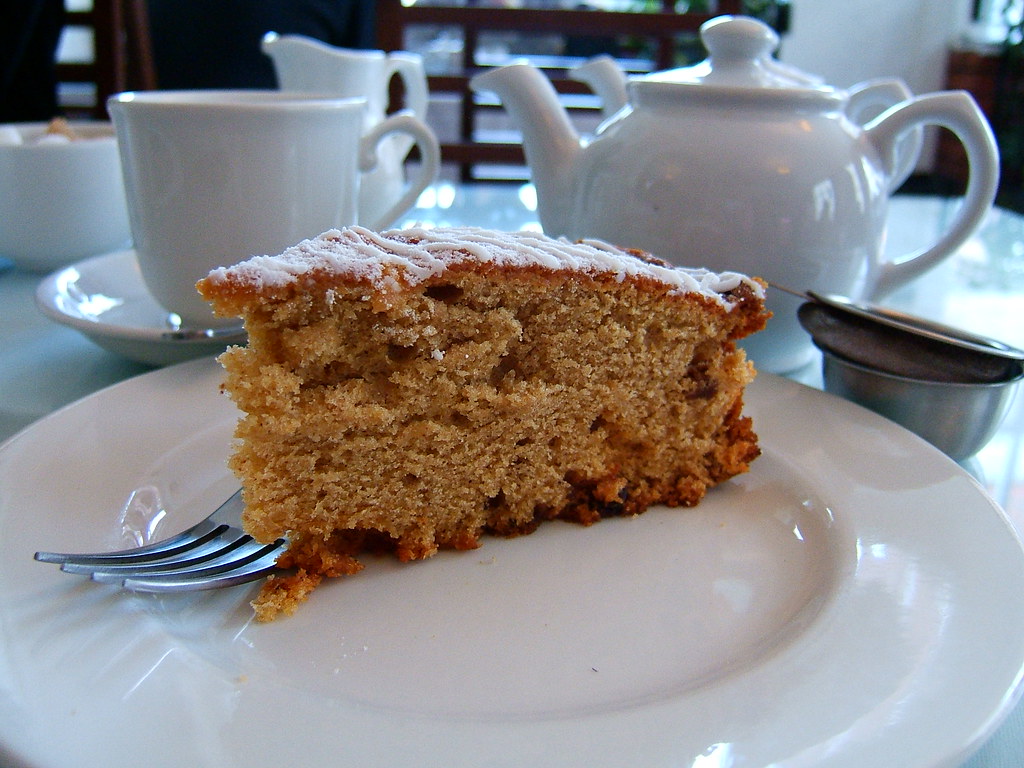
Onces or merienda
I'm translating a French novel for a publisher in Madrid, and a single word, goûter, kept me arguing with myself for a whole week.