kids · languages · winter
I speak Spanish, they answer in French
Ten years of talking to my kids in Spanish while they answer me in French, and one feverish January night when something shifted.

This morning, while we were hunting for Inés's gloves under the sofa, I said to her, in Spanish: "Sweetheart, put your boots on, it's brutally cold out there." Without looking up she answered: "Oui, papa, deux secondes." And she put her boots on. She'd understood every word, even "berraco", our Bogotá word for brutal, and I have no idea where she picked that one up. But she answered in French, as always, like her brother, as if Spanish were a radio playing in the kitchen: you hear it fine, you just don't sing along.
I've been in this split conversation for ten years. Tomás was a few months old when I decided, with the solemnity you only have with a first child, that I would speak to him exclusively in Spanish. I read articles. Claire backed me with very French enthusiasm, meaning she backed me with arguments. I bought the Rafael Pombo books every Colombian kid grows up with, the poor little old woman, the tadpole who goes out walking, and I read them aloud in the voice of a grandfather from Boyacá. Tomás laughed in the right places. Until he was three he mixed everything: "agua" and "lait", "abuela" for my mother and "mamie" for Claire's. Then he started school and French carried him off, without a fight, the way a river carries off a branch.
What they understand, what they say
It isn't that they can't. They understand almost everything. Tomás corrects my slips in French with the patience of a civil servant, but if I ask him in Spanish what he did at break, he tells me in French about the ball that got stuck on the gym roof. Inés, who is seven and has a very busy inner life, sometimes drops a Spanish word like someone showing off a rare coin: "chévere", "qué pena", "ay, no". She says them with my exact intonation, and that undoes me more than a whole sentence would, because it's like hearing myself from the outside.
I'm a translator. I spend my days carrying things from one language into another, and I know better than most that a language isn't a code, it's a house. You can't ask anyone to live in a house where they have no friends, no memories, nobody to argue with. My children's Spanish is a house where only I live, plus my mother on Sundays, on video calls from Bogotá, with the camera pointed at her forehead.
A night in January
In winter Lyon goes grey by half past four, and the nights are long for everything, this included. Last night Tomás had a fever, not a high one, just enough to make him clingy. He asked me to stay a while. I was stroking his hair and, without thinking, I started singing "Duerme negrito", the lullaby my mother used to sing to me, which I hadn't sung to him since he was a baby. I expected him to tell me it was for little kids. He said nothing. When I finished, eyes closed, he said: "Encore, papa. Celle du negrito." And he pronounced "negrito" perfectly, with the soft Spanish r, not the throaty one he uses in French, exactly the way my mother says it.
I kept thinking about that word long after he'd fallen asleep. You imagine that passing on a language means passing on the vocabulary, the grammar, the subjunctives I struggled so hard to explain to Claire. Maybe what actually happens is something more crooked: pieces get through. A song, a word, Inés's "ay, no" when her ice cream hits the pavement. Pieces that don't add up to a language but do add up to something, even if I don't know what yet.
This morning, fever gone, Tomás came down for breakfast and asked in French if there was any bread left. I told him in Spanish that there was, in the bag. He went to get it. Outside it was still dark and the frost had turned the car roofs white. Inés couldn't find a glove. I told her about the boots. She told me about the two seconds. The conversation goes on, split down the middle as always, and I keep talking from my side of it.
Keep reading
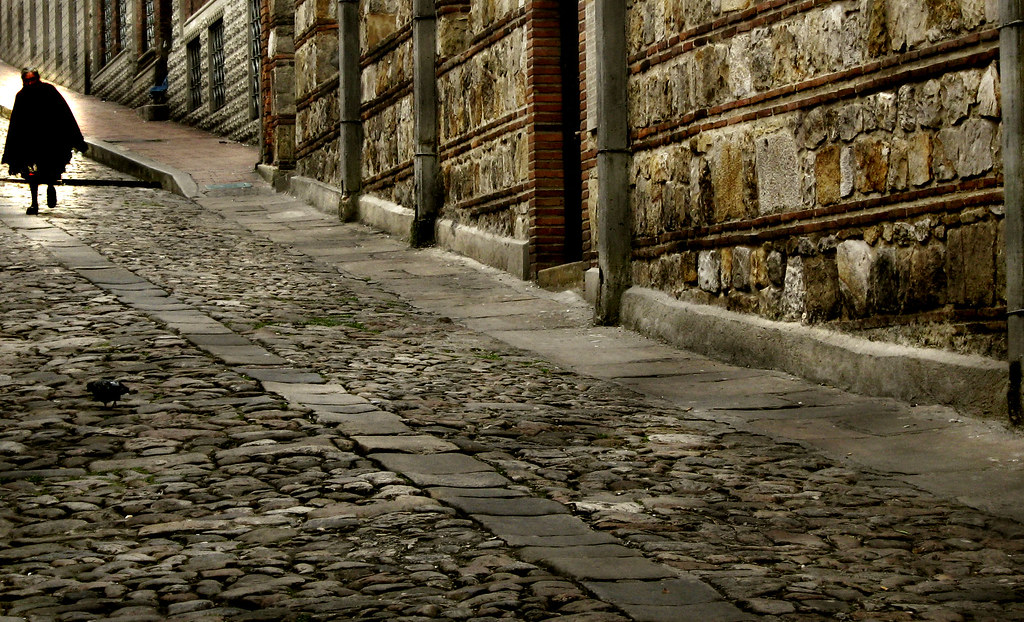
Bogotá again, in August
Three weeks in Bogotá with Claire and the kids: the cold of the high plain, my mother a little smaller, an ajiaco, and a question she had never asked me quite like that.
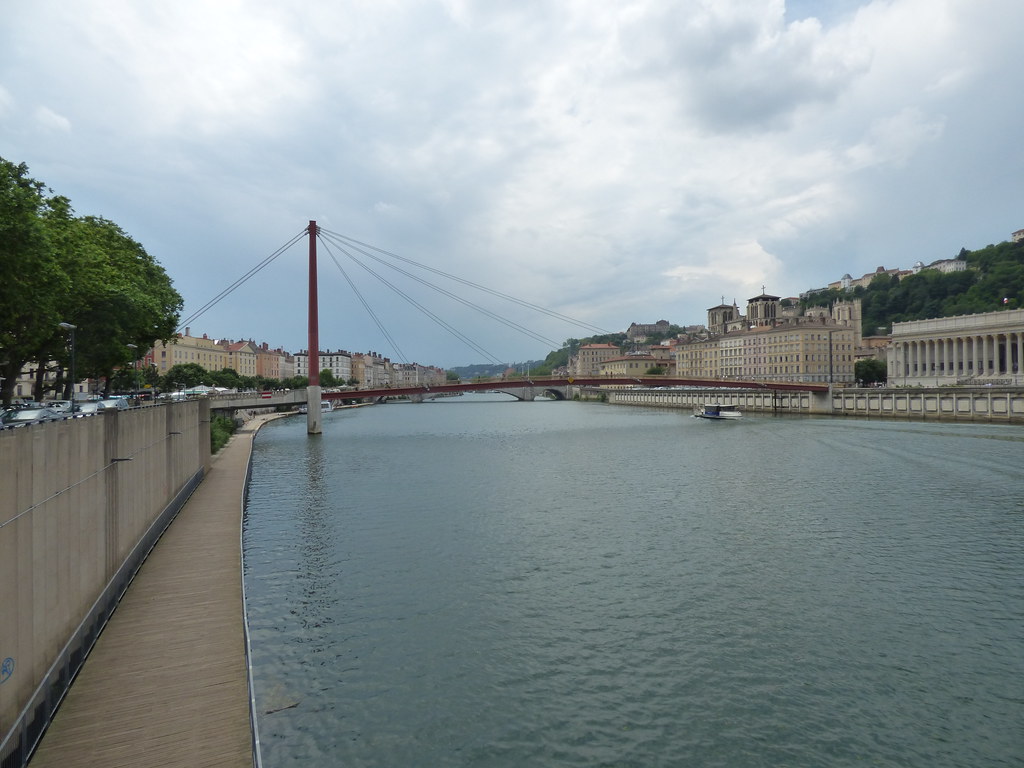
Fernando's Saturdays
After my run along the Saône I always end up at the same stall in the quai Saint-Antoine market. This Saturday Fernando told me he was leaving.
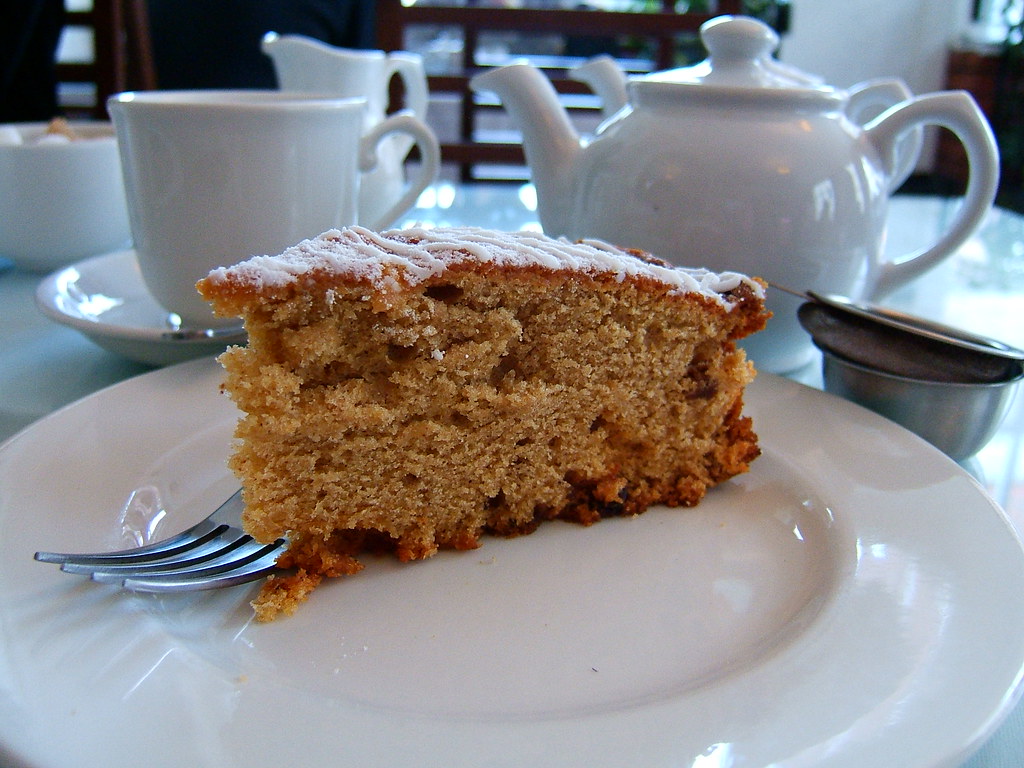
Onces or merienda
I'm translating a French novel for a publisher in Madrid, and a single word, goûter, kept me arguing with myself for a whole week.